During the past ten years of providing home inspections in the Barrie and surrounding area, one issue is more prevalent than any other. Electrical work being done by home owners or unskilled individuals is by far the most dangerous and serious issue that commonly faces new home buyers.
When inspecting a renovated basement and a large amount of electrical deficiencies are detected it immediately raises warning flags. The biggest issue it the fact that a building permit was not taken out for renovation. This also implies that not only was the electrical work not inspected, but the plumbing, structural and heating changes were also not inspected.
If you buy a home that has had major renovations completed without a building permit or inspection being completed you are essentially taking ownership of any deficiencies and remedial actions that maybe required. Any savings accrued by the “do it yourself” renovator will go into the sellers pocket and any future expenses will come out of the home buyers pocket.
Read the article below regarding contractor who performed electrical work without permits or proper training.
First Ever Jail Sentence for Doing Electrical Work without Licence
Court sends strong message to repeat offenders whose actions put public safety at risk.
MISSISSAUGA, ON, Oct. 7, 2014 /CNW/ – On Oct. 2, 2014 a contractor was sentenced in a Hamilton, Ontario court to 30 days in jail and $6,250 in fines on charges related to performing electrical work illegally and violating severalOntario College of Trade’s requirements. This is the first time a jail sentence has been handed down by an Ontariocourt for this type of offence. The defendant was also placed on two years probation.
Richard Hazel, operating as Voltcom Electrical Services, was found guilty on eight charges: four counts of working without an electrical contractor’s licence, one count of failing to obtain the required inspections, two counts of producing a false certificate of qualification, and one count of leaving behind unsafe electrical conditions at four homes in Hamilton and Burlington. Mr. Hazel was previously convicted in 2012 on 19 counts of violating electrical safety regulations at seven sites in the Windsor area resulting in a total fine of $23,750.
In addition to the ESA charges, Hazel pled guilty to five related charges laid by the Ontario College of Trades and was fined an additional $7,400 plus one year probation for those offences.
In October 2013, an ESA Inspector identified a renovation in a Hamilton home had been done without a permit and determined upon further investigation that repeat offender Richard Hazel had completed the work. Numerous electrical hazards were found. The investigation also found that Hazel falsely produced an Ontario College of Trade’s certificate of qualification in order to gain employment with two licensed electrical contractors.
“The court has delivered a strong, clear message with this conviction and sentence that repeated, unlawful behavior that puts public safety at risk has serious consequences. Despite previous convictions, this individual continued to flout the law,” said Normand Breton, General Manager, Registrar and Director Contractor Licensing and Powerline Safety. “We are very pleased to see that the court has taken this next important step which we hope will deter others in the underground economy who are working outside the law.”
How to Ensure You Hire a Licensed Electrical Contractor
Consumers are reminded when considering hiring someone to do electrical work to follow ‘the three C’s’: check to ensure the contractor holds a valid ECRA/ESA electrical contractor licence (you can search the database at www.esasafe.com); confirm that they are arranging the appropriate inspections from ESA; and call ESA at 1-877-ESA-SAFE (1-877-372-7233) if you suspect someone is misrepresenting themselves. “Don’t settle the final bill until you have the ESA Certificate of Inspection in hand,” added Breton.
Hiring an ECRA/ESA licensed electrical contractor ensures that the company you have hired:
is fully insured
uses qualified electricians to perform the electrical work you require
will arrange for permits with the ESA
can deliver an ESA Certificate of Inspection
About the Electrical Safety Authority (ESA)
The Electrical Safety Authority’s (ESA) role is to enhance public electrical safety in Ontario. As an administrative authority acting on behalf of the Government of Ontario, ESA is responsible for administering specific regulations related to the Ontario Electrical Safety Code, the licensing of Electrical Contractors and Master Electricians, electricity distribution system safety, and electrical product safety. ESA works extensively with stakeholders throughout the province on education, training and promotion to foster electrical safety across the province
Many times during a Home Inspector a deficiency is found which scares the potential home buyer from purchasing property. Many times it is because of perceived financial cost of repair or it’s simply because they are not interested in purchasing a home that requires extensive repairs. Here are some pictures of defects that have scared away potential buyers.
Mould is #1 on hit list of items to scare home buyers
Mould is everywhere in the air, inside and outside your home. Mould can grow within 48 to 72 hours after any water leaks or moisture issues in your home. Mould only needs moisture, heat and protein to grow and start spreading. Some people are so sensitive to mould that they can detect it shortly after entering a home. The health effects of mould include “Flue Like” symptoms and the following: Eye, nose and throat irritation; Coughing and phlegm build-up; Wheezing and shortness of breath; Symptoms of asthma and Allergic reactions.
Water Penetrations into Home are #2
Ony the most seasoned “Do it Yourselfer” will typically tackle a home which has a known water penetration issue. If for example your home is built in an area with a high water table, you can expect an ongoing issue with water entering your home. You can spend thousands of dollars trying to keep the water out or you can find a home where water is not an issue.
Asbestos Insulation is #3
Asbestos can be extremely hazardous to your health and financial budget. Specialized equipment has to be used as Asbestos is a Class 2 hazard. Costs can vary from $1,500.00 to $20,000.00. Some contractors will not work in older homes until drywall etc has been tested for asbestos. In Toronto most people will not buy older homes without having an environmental study completed.
Aluminum Wiring is #4
Many insurance companies state that you are 55% more likely to have a home fire if your home has aluminum wiring. Many insurance companies will not insure a home with aluminum wiring. Other insurance companies will require a ESA Certificate prior to insuring a home. Depending on access to wiring in a home, the cost of replacing aluminum wiring can be prohibitive.
There are many more issues that can affect a home buyers decision which we have not covered. Knob and Tube wiring and Galvanized Plumbing are two other issues which can be expensive to fix and make your home hard to get insurance on. Read more articles on Home Inspections and Defects encountered at our site
Aluminum Wiring in your Home – What Home Buyers Should Know
The only thing that is certain about buying a home with aluminum wiring is that everyone has a different opinion about what a home buyer should know or do. The biggest problem with aluminum wiring is that many insures will not insure the home. Some insurance companies will insure your home but only after you get a Certificate of Inspection from ESA. (The Electrical Safety Authority).
Prior to obtaining a ESA Certificate of Inspection you will have to hire a licensed electrician to inspect all the termination points of the wiring. This will include removing all outlets, light switches, appliance connections and of course the panel board. If approved devices have been installed for outlets and switches they will be stamped with “C0/ALR” or “AL-CU”, which indicates that are rated for use on aluminum circuits of 20 amps or less.
Aluminum wiring is susceptible to oxidation at its contact points when used in conjunction with devices designed for copper wiring. Also, when the aluminum wire heats up due to gaps caused by oxidation it creates heat, this causes the metal to move away from heat source. This is known as “Cold Creep” as the aluminum does not return to original position or shape when wire is cooled. Some of the signs of problems in aluminum wiring is discoloration of light or outlet cover plates, smoke or sparking at devices, flickering lights or smell of plastic insulation burning.
Some studies have indicated that a home with aluminum wiring 55 times more likely to have an over heat or fire condition than a home wired with copper. Some home owners have added pig tails to their aluminum wiring and is currently an accepted method by ESA. Some studies in the US have found this method actually increases the risk. Changing all devices to one rated for aluminum wiring is also an option. Use CopAlum Crimp connectors on all connections, or re-wire entire home replacing all the aluminum.
Remember that when you put your home back on the market, many home owners will be asking themselves the same questions that you did when you bought the home. This is definitely a item of concern when it comes to resale value. Hopefully you hire a competent home inspector who understands aluminum wiring and is not afraid to tell you, the home buyer, the truth, thus allowing you to base your decision on buying a home on the facts.
Many homeowners have electrical work done without having a building permit or an electrical inspection at completion of work. One very unique problem that I have encountered every so often, is a homeowner installing a bathroom where main electrical panel is located.
Most electrical work requires that you pull a permit with your local electrical authority. Many jurisdictions allow a homeowner to work on his/her own home’s electrical system. Some areas only allow work on branch circuits and not main service panel installation. Other areas will not allow homeowner permits at all. This varies from place to place, so it is CRITICAL that, before you commence any do-it-yourself home wiring project, you first check the rules in your area.
Exclusion of Rules: If a house had a permit issued, was inspected and met the standard required at that time, it would be considered “Grandfathered”, and would not be required to be brought up to today’s standards. This would not apply to any work that was done improperly or to any additions to electrical system without a permit.
According to 2006 Electrical Code Simplified, the following rules apply:
Rule 2-308 requires a minimum working space of 39 inches of floor space in front of electrical equipment.
Rule 26-402 Location of Panelboards
Subrule (1) Panelboards shall not be located in coal bins, clothes closets, bathrooms, stairways, high ambient rooms, dangerous or hazardous locations, nor in any similar undesirable places.
According to the NEC (2011 edition)
Section 230.70(A)(2) – “Service disconnecting means shall not be installed in bathrooms.”
Section 240.24(E) – “In dwelling units, dormitories, and guest rooms or guest suites, over current devices, other than supplementary over current protection, shall not be located in bathrooms.”
This is from Ontario Electrical Safety Bulletins 2009
BULLETIN 26-20-2
Panel boards – Location, Working Space and Mounting Height
Rules 26-402, 2-308, 2-310 and 6-206
Issued May 2009
Supersedes Bulletin 26-20-1
Scope
(1) Mounting height of a Panelboard
(2) Working space around a panelboard
(3) Panelboards and bathrooms
Rules 6-206 and 26-402 give direction as to where an electrical panelboard should not be installed by
noting some of the undesirable places. An important part of this requirement is to also insure ready
access to the panelboard and to provide suitable working space for operation or maintenance as required
by Rules 2-308 and 2-310.
(1) Mounting height of a Panelboard
Direction
There has been some confusion in the industry regarding interpretation of Rule 26-402(2) with respect to
the correct mounting height of a panelboard in a dwelling unit. This subrule has two criteria that must be met:
1. The panel shall be mounted as high as possible.
2. No circuit breaker handle or breaker blank shall be more than 1.7 m above the finished floor level.
(2) Working space around a panelboard
Question What is meant by “A minimum working space of 1 m with secure footing…” when applied to residential panel boards that are mounted on or in a wall and require access from only the front?
Direction This is interpreted as meaning a space that is at least 2 m in height, at least 1 m in depth in front of the panel, and at least 1 m in width or the width of the panel board, whichever is greater. The panel board does not have to be centered in the width of the working space; it can be off center.
(3) Panelboards and bathrooms
Background
Questions periodically arise about installing a panelboard in a bathroom. This is considered an undesirable location because of excessive moisture issues and limited working space in front of the electrical panel in many bathrooms.
Direction
If the panelboard were installed in a “separate room” located off of the bathroom, that provides the one square meter of clear working space as required by Rule 2-308, as well as ready access to the door leading into the room as per Rule 2-310, then the panelboard would be considered to be located in an acceptable location.
Check back often to see more information as this article is updated as information becomes available.
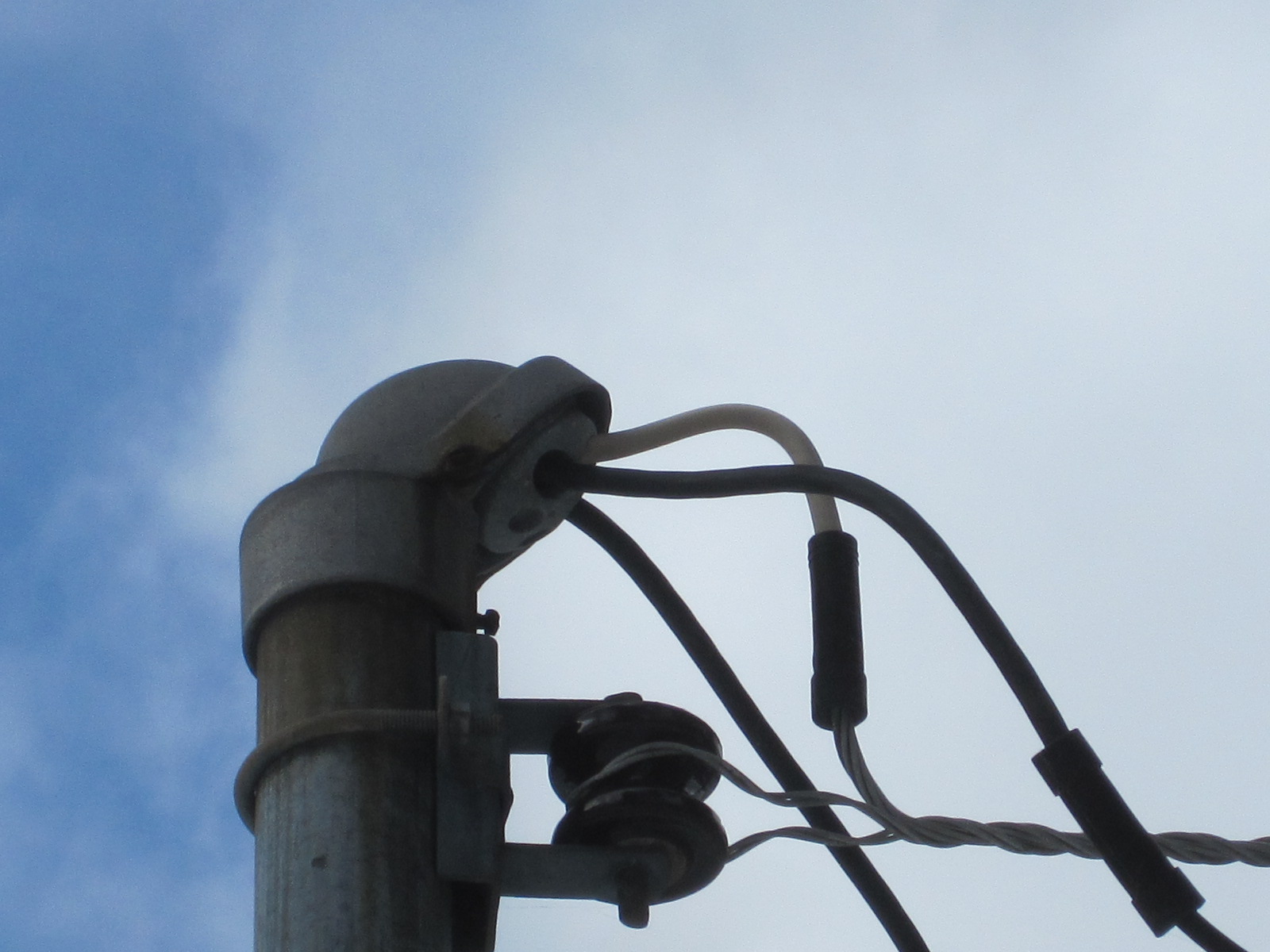
A home’s electrical system is complex, and a professional home inspector will always inspect the service connection before moving indoors to examine the main panel and other components of the system. Every overhead electrical service is required to have a drip loop in hot, neutral and ground wire. This prevents water from following wire down into mast head and eventually into your main panel.
Many times I have come across homes which have a 100 amp panel and service on the Real Estate listing but upon investigation I have had to inform the home buyer that they only have a 60 amp or less service. Some sellers will install a 100 amp rated panel but it will either only have a 60 amp breaker or it is connected to a fused switch box which is 60 amps or less. This is an important item for a purchaser as most insurance companies will not insure a cottage, never mind a residential home with less than a 100 amp service. Older homes may not even have 100 amp service from the local hydro service. The home owner would be responsible for upgrading wires to mast and service connection.
Older homes will often have knob and tube wiring as part of the homes electrical system. Once again insurance companies will often refuse to ensure a home with older knob and tube wiring installed. Unfortunately many home owners or electricians will only replace the easy to access knob and tube wiring and hope that what is remaining is not discovered. Recently I inspected a home in Georgiana Township which had the attic access from a dormer on the roof. The ceiling joists were older and under sized compared to today’s standards but there was a barely visible knob and tube circuit on the other side of the attic. I slowly ventured across the ceiling joists which moved when my weight was applied and got close enough to test the knob and tube with my electrical tester…and wow, what a surprise, there were two live knob and tube circuits and they had newer romex electrical cable being fed from them. So here we have a building where the electrical panel and lower wiring had all been updated but up in the attic out of sight someone made the decision to take a short cut!! Unless you look you just never know what you will find.
Basements are the scene of many “do it yourself” renovations. In Ontario any electrical changes or improvements requires a permit and inspection by the Electrical Safety Authority or the work must be performed by a Master Electrician who carries the proper insurance. When you go into a basement and find your typical cluster of electrical mistakes you can immediately assume that the work was not done by an electrical tradesperson or was there a building permit issued for the renovation. Some of the typical errors found are: reversed polarity on outlets; missing electrical covers; un-secured electrical cables at boxes and running across walls and ceilings.
One of the most expensive electrical repairs could be when a home owner builds a basement using steel studs and fails to use the proper grommets for insulation purposes. When you find a section of steel stud wall where the romex cable was just pulled through the holes I think it would be safe to assume the whole basement had been wired the same way. The fix for this would entail removing all the drywall to install wiring properly and in accordance with the Electrical Code in force for your area.
Aluminum wiring is another situation where insurance companies maybe reluctant to insure a property which has aluminum wiring installed. There are a lot of homes and cottages where there may have been originally aluminum in main floor installed but a later renovation was all done in copper, your insurance company may require the aluminum to be upgraded to copper prior to insuring property. Some home owners will have all the accessible aluminum wiring replaced but my attempt to hide the remaining aluminum. This is often done by using junction boxes or even as simple a subterfuge as inserting cable fully into fuse or breaker to make identification difficult. Fortunately aluminum wiring also has aluminum ground and neutral so a quick look at the neutral bar and ground connections will quickly identify any aluminum circuits. This is one of the reasons that the Barrie Home Inspector removes the cover from the main electrical panel and checks some of the visible junction boxes. This is just too expensive a problem to take a chance on information supplied by the seller.
As a home buyer you can protect yourself when purchasing a home with some minor wiring deficiencies by requesting a inspection certificate from the Electrical Safety Authority in Ontario and the Authority Having Jurisdiction in your area.
Electrical Problems in a Home. Electrical deficiencies are one of the most frequent problems found during a home inspection, usually resulting from DO IT YOUR SELF home owners. According to the Electrical Safety Authority survey 32% of homes in Ontario have had electrical work done by persons other than a licensed electrician. An amazing 58% of home owners who have done electrical work admit that they have little experience.
Whether you hire an electrical contractor or do the work yourself, all electrical installations or changes must be inspected to ensure they comply with the Ontario Electrical Safety Code. This applies to private homes, offices, industrial buildings and income properties.
Basement renovations are prime locations for finding Reversed Polarity outlets. Reversed Polarity typically occurs when the “hot wire” is mistakenly attached to the neutral screw of the outlet. This has become more common with the more frequent use of plug-in wire connectors located on the back of outlets. When using the screws to attach electrical leads, the hot screw is “dark in colour”, while the neutral is “lighter in colour”. Most people make the simple deduction of Black to dark and White to light, which will give you the proper polarity. The main problem with reversed polarity is that most appliances when turned off will open the “hot circuit” which interrupts the power supply. The Reversed Polarity circuit only interrupts the neutral leaving the power on to your appliance. If you are grounded and you touch a hot wire or component you will be shocked by the results. Another scenario is your table lamps light socket, when reversed the exposed metal socket becomes live and if touched will shock you. The Barrie Home Inspector will check your electrical outlets and note any with reversed polarity.
[wp-like-locker]
Bathroom GFCI ( Ground Fault Circuit Interrupter) outlets are confusing to most home owners who truly do not understand the basics wiring used in most homes in Ontario. Many subdivision homes will have a GFCI in lower bathroom and it will be used to protect the upper bathrooms which are downstream of installed GFCI outlet. Without having an outlet tester home owners are sometimes un-aware that their upper bathrooms are already GFCI protected and install another GFCI outlet in their upper bathrooms. Now whenever the GFCI trips upstairs you have to reset the lower GFCI prior to resetting upstairs GFCI.
Basement renovations will sometimes lead to some pretty simple but possibly expensive repairs. Any wall is required to have an electrical outlet every 12 feet, not including doorways, which is designed to prevent the use of extension cords, which can be a fire hazard. Steel studs are required to have grommets installed where wire is passing through stud. Most contractors would not recommend putting a steel stud wall system in a basement due to the conduction problem if used on an exterior wall. If you find a section of steel stud wall where the electrical cable was not properly installed then you would naturally assume that any finished part of basement would have the same problem, which could kill your house sale, or lead to an expensive repair.
Exposed electrical cables that are under 1.5 meters high have to have protection from mechanical harm. Typically these wires would be armored cable or encased in conduit for protection. Many people simply ignore this rule and haphazardly run their cables down walls and even out to the exterior of their home. Any wiring underground has to be installed in a PVC conduit and buried a minimum of 18 inches, depths vary for various locations such as 30 inches below flowerbeds etc. Any exterior outlets added must be protected by GFCI.
The condition of older insulation jackets must be monitored. I recently inspected a home where the majority of electrical cables located, only on the left side of panel, had all deteriorated and would have to be replaced. The home owner was totally un-aware of the condition of her electrical system. The cause of the electrical cable insulation deterioration was unknown but could have been mice or contact with chemicals.
Remember when buying a older home you need to hire a home inspector who has the knowledge and experience to not only find but identify deficiencies which could affect your safety and help prevent unexpected repair expenses. Call the Barrie Home Inspector for your next purchase.