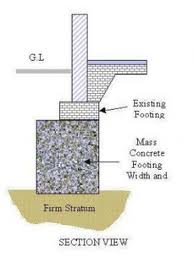
Underpinning to Correct Subsidence. Subsidence is among the major structural issues that may affect houses. Subsidence is where parts of the house foundation move or sink leading to cracks and sticking doors or windows. The causes of subsidence can be any of the following…
– the house foundations haven’t been dug deep enough;
– where clay soil contracts (due to the water table falling or due to tree roots);
– where water seepage washes soil away from the foundations.
For severe cases of subsidence, underpinning or piling is necessary to resolve the issue. This may be a lengthy, expensive and disruptive process. Fundamentally, underpinning and piling is building a new foundation beneath the existing foundation in order to offer a stronger and more stable base. This will typically involve putting a metal ‘table ‘ beneath the existing foundations and supporting that table with deep metal piles. If your subsidence issues require underpinning or piling then you need to employ an expert contractor to do the work.
Piling and underpinning is very expert work. Experts are a requirement to analyse the subsidence and its causes in order to design a proper solution. The solution design will require complex calculations based on the house structure, the soil, the vicinity of trees and plenty of other factors. From this there’ll be a design for the underpinning table and the piles. Clearly, digging deep piles and putting a metal table underneath a home is a difficult and lengthy task (especially if the house is close to or adjoined to other homes).
If you have serious subsidence then it’s necessary to employ a contractor that has got substantial experience in resolving such issues and in undertaking underpinning projects. Such a contractor would work with structural engineers to analyse the reasons for subsidence and then with the piling specialists who will design the best solution which is implemented by ground works contractors. A good contractor must be acutely knowledgeable to the impact that this work has on house owners (and possibly their neighbors) and should work to attain a quality solution whilst minimizing disruption.
Find out your homes problems prior to buying, contact the Barrie Home Inspector prior to investing in your next property.
There are a lot of different things that should be done regularly by a homeowner. Regular tasks that need to be completed might include shoveling show off of a roof or gutter cleaning in Barrie ON. Sometimes it can be done by a homeowner but seniors for example will hire companies to do this chore.
Gutters that are in good shape get water from falling and dripping around your home, which protects your basement from water by diverting water. Putting them over doorways are a great option so that people are not getting water dumped on them from rain and melting snow. One problem with these is that they can collect leaves or other debris which can block downspouts.
This might clog up any type of gutters. The edges will overflow because the water cannot escape. This can cause big problems when water enters your basement, either through walls or windows. Trees always lose their leaves and these are going to gather in your gutter, that is just the way of nature.
Gutters can be cleaned by professionals. They may be quicker and usually have the proper equipment to make the job easier. Homeowners are able to do this if they are willing to climb ladders and walk their roofs. Drains might be harder to clean because not all of them come apart and debris can become caked and form blockages if left too long.
There are products that a homeowner can install which will protect their gutters from leaves and pine needles etc. Ensure whatever product you choose is specifically designed for the type of leaves in your area. A gutter that is excellent for maple trees may quickly clog up if faced with pine needles for example.
For more information on Home Maintenance projects and advice visit your local Barrie Home Inspection Company website.
Dehumidifier For Wet Basement
Why Use a Dehumidifer? In spaces that are naturally more damp, such as basements and crawl spaces, a dehumidifier will help dry the air, reducing musty odors and preventing mold growth and other issues caused by excess moisture.
A basement dehumidifier helps maintain an ideal indoor relative humidity (RH) level in the space. The Environmental Protection Agency suggests that the indoor relative humidity be kept between 30-60% to help prevent mold growth. A home with relative humidity above 60% can also be a breeding ground for pests and wood rot
When constructed properly and with the appropriate air conditioning and ventilation, a basement should be dry. But many basements are particularly prone to dampness because of their poor design and ventilation. Dampness like this is a perfect breeding ground for mold and mildew, especially in basements where old books, magazines, clothing and suitcases are stored.
When the humidity level goes over 50%, the water vapor in the air can cause furniture to warp, moisture to condense on walls and floors and promote growth of fungus. It will also accelerate wood rot. For those family members with allergies, a basement dehumidifier is crucial to lessen the health risks linked to toxic mold and fungus.
Many of the most common causes of allergies, including dust mites, mold, and mildew, thrive in humid environments. Whether you live in a humid climate, or you just have a living space that tends to be more humid, you may be suffering from these things. Small living spaces with limited ventilation, such as bathrooms or kitchens in a small apartment or basement apartments, are common areas where moisture can build up, even in dry climates.
Moist, damp air is the ideal environment for mold to flourish (50-65% humidity), and a dehumidifier can remove the surplus moisture while preventing new mold from growing. If you or anybody in your home suffers from frequent asthma attacks or if you see mold growing in various places, then you should strongly consider getting a dehumidifier for your home.
But before you go off to purchase a basement dehumidifier, consider taking some time to investigate the reason behind the high humidity, and then repairing the underlying problems. For example, your basement should ideally be the same temperature as the rest of your house, and not an isolated cool temperature zone. Try adding weather-stripping to any basement doors and windows. If the basement is uninsulated, youll have to weigh the costs of adding insulation against that of running a basement dehumidifier.
Buying a basement dehumidifier will require a little planning. Know the cubic footage of the basement space that it will be going into. Also you will need to decide on getting a permanently installed unit versus a portable dehumidifier. An other shopping point is to consider are the size of the unit- will it fit in the space you are planning for it? Also be aware that some models are noisier than others, so ask for a demonstration before you buy.
Noise levels – The noise level of the specific basement dehumidifier is also crucial. For basement use, I’d advise you to go with a unit that emits more noise. But you shouldn’t invest in one that is extremely noisy. I’d recommend that you go for a unit that’s moderately noisy. It will tell you if the unit is running or not. If you are thinking of using the same unit in your living room or bedroom, the more silent model is probably your best option.
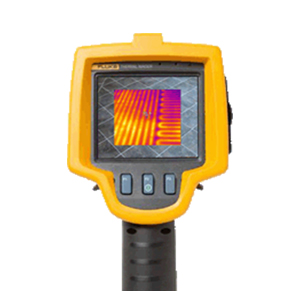
During home inspections in Barrie Ontario, I come across many basements with running dehumidifiers, which is not unusual, but if the basement still has damp feeling or smell, then it is very important to check all exterior walls with moisture meter and thermal imaging camera.
Thermal Imaging measures the temperature of walls, ceilings, and floors. The infrared camera shows a colour screen indicating a visual picture of either moisture or hot spots. This is especially useful for finding hidden moisture, missing insulation or electrical hot spots. Thermal Imaging identifies changes in an items thermal structure that the human eye cannot see.
Contact Information
Roger Frost
Certified Building Code Official
Certified Master Inspector
Phone: 705.795.8255
Email Roger
Want your lawn to be the envy of your neighbors? Well, with some simple planning this article can help you get the lawn you deserve this summer. Plants need nutrients, sun and water to thrive and grass is no different. Provide it with the right environment and it will become the perfect lawn. If you know your type of lawn you can look for additional specific needs beyond typical care and maintenance.
Test Your Soil: All grasses need food to live. They also need the right conditions. Performing the proper testing and fertilization are keys to a lush lawn. The right pH levels and levels of nitrogen and other trace elements are the most crucial. All garden stores carry an inexpensive testing kit that gives you a basic measure of these nutrients. However, these are generally inaccurate and provide little in the way of help fixing any deficiencies. Instead try a local university. Most provide a detailed analysis of soil, highlight deficiencies with exactly how to fix them.
Mowing: Every type of grass has different needs and grows at different rates. In general, however, mowing your lawn too short is a bad idea. It weakens the plant itself as it struggles to grab capture sunlight for photosynthesis. It also allows weeds to take purchase by allowing sunlight to penetrate to the soil. Try to keep your lawn at a height of three to four inches during peak growing season. Also ensure your lawnmower blade is sharp. A dull blade will damage grass rather than cut it, slows growth and invites disease by weakening the plant.
Fertilizing Your Lawn: Feeding your lawn is important for great color and lush growth. Make sure you follow a feeding schedule to avoid over-feeding. Overfeeding can be more damaging to plants than not feeding at all and can lead to sudden death or severe grass burn. During the winter months grasses still need nutrients to survive. “In fact, providing the right levels of phosphorus can help grass roots overwinter better and emerge stronger in the spring,” says Nate Merchant.
Watering Your Lawn: All grasses need water but different types have different requirements. Warmer season grasses go dormant earlier than the cooler varieties and require less water. Generally most grasses need water about once a week. Long, infrequent watering is preferable since it requires roots to travel deeper in the soil between watering which strengthen the plant. The time of day is important as well. Try watering in the early part of the day. This prevents burning your lawn in the hot sun and allows the grass to dry before the evening when fungus can set in.
Keeping Disease and Pests Away: The sad truth is that nobody is safe from pests and disease effecting their lawn. Disease and fungus can spread very quickly and be devastating to lawns if not identified and treated quickly. Keep and eye out for any strange patches or changes to your lawns color. Call an expert or visit a garden store at the first sign of a problem. You can reduce the incidence of these problems by keeping weeds at bay with a herbicide applied in the spring and fall.
Why home owners are turning to Fake Grass.
How to Stain Your Deck for Lasting Beauty.
How Long will your Home Last
For more home owner tips visit Barrie House Inspections for valuable advice.
Common Types Of Pet Fence. It is important to give your pets proper space, freedom, and movement. They should not be jailed forever. They will also need to see the world, exercise, and play. Sometimes, animals can roam around restricted areas. They may do damages to your garden, yards, and lawns when not guarded. They can also roam in your neighborhood. Roaming in neighborhoods can be illegal. It is important to contain pets in proper places then. Using pet fence Columbia can be one way to do that. These fences can come in many forms. Learn then what these forms are.
Electronic fencing can be selected for the animals. Today, this is very common. It is invisible, so your landscape will not be ruined. When the perimeter is neared, the animals will receive a low electrical jolt. A special collar must be worn by the animal for this. The shocks are delivered by the special collar. The perimeter would also be placed with sensors. The sensors could be buried underground as well.
This is hidden, making it a very popular selection. The great views can still be enjoyed as fencing will not obstruct them. Portable types can be selected too. When you and your animal will travel, this could be brought around.
Chain link fences can also be an option. Various sizes, materials, and colors can be chosen for this. Permanent installation may be chosen, but portable types may be selected too. Intruders can be warded off by this as well. Its durability is also high.
You may also choose traditional fencing. You can install wooden privacy fencing in your yard. You can also choose other materials for this like vinyl, composites, and aluminum.
Your needs must be considered when you select. The heights and sizes, the materials, and the costs should be determined. Your needs, your preferences, and your animals should be accommodated by the one you select.
It is really important to know the common forms of pet fence Columbia. With this, you can choose the perfect fencing to contain your precious pets.
Visit the Barrie Home Inspection website for more information.
Deck Can Increase the Value of your home. The weather is getting nice again and it’s a good time to consider how you might better use of your existing space. A great way to increase the size of your space is to move things outside. What if you have a beautiful deck out back? A well laid out deck can help you add living area to your existing home. Decks are commonly built with roofs and sun shades which allow you to fully enjoy them during the summer months.
Adding some patio furniture, fire pit, barbecue and even a hot tub can turn a part of backyard into your summer oasis. Many people in the country have room in their backyards under an existing or potential structure that could be used. With new metal decking systems there are no spaces between sections. This water-proof seal prevents the weather from hitting the area below. That means that space remains dry and sheltered from the elements.
The area under your deck can also be used for storage with a little addition to some fiberglass or plastic panels to protect storage from water. Adding a gutter system can also make your storage area dry and also allows you to direct your water to a desirable discharge point.
Things on your deck are done and it’s time to put on the finishing touches. Most people are hesitant to stain or paint the floor of wood decks as this becomes a yearly chore of sanding, scraping and painting. A lot of people just use a water proofing product which has no visible finish, which will protect your deck and not become a yearly maintenance project. Remember the idea is to enjoy your back yard oasis not add a chore on your summer project list.
View more articles on home maintenance and ideas at Barrie Home Inspector’s website.
Roof Types and Materials. A roof protects the building and its contents from the effects of weather. The roof may also protect against heat, sunlight, cold, snow and wind. Roofs height can range anywhere from 1 to 3 stories for the typical home inspection.
The characteristics of a roof are dependent upon the purpose of the building that it covers, the available roofing materials and the local traditions of construction and wider concepts of architectural design and practice and may also be governed by local or national legislation.
Most new homes have a composition shingle which can range from a thin 20-year shingle to the thickest which are limited lifetime shingles, the cost depending on the thickness and durability of the shingle. When a layer of shingles wears out, they are usually stripped, along with the underlay and roofing nails, allowing a new layer to be installed. An alternative method is to install another layer directly over the worn layer. While this method is faster, it does not allow the roof sheathing to be inspected and water damage, often associated with worn shingles, to be repaired.
The angle of the roof above the horizontal is referred to as the pitch, which is expressed as a rise of inches per foot. For example, a roof that has a rise of 4 feet over a run of 12 feet has a 4/12 (or 4:12) pitch. A roof with a rise of 12 feet over a 12-foot run has a 12/12 pitch; expressed in other terms, the same roof has a 45 rise. typically asphalt shingles are not used on a roof with a slope under 3/12. A roof with a pitch lower than 2 /12 (or 2 feet of rise in 12 feet of run) is classified as a flat roof.
When inspecting gutters the Barrie Home inspector’s approach is to make sure that all gutters slope toward the downspout. In judging adequate slope, look for signs of standing water in portions of the gutter away from the downspout, and eyeball the margin against the fascia. It is not uncommon to see gutters installed too low on the fascia, or to see roof coverings projecting too far over the gutter. In both cases, this may lead to the water over-shooting the gutters completely.
Vinyl guttering is not only very common on new construction, but is also the do-it-yourselfer’s material of choice, as it is available off-the-shelf at most home improvement stores. Prefabricated angles, corners and connections are readily available, and installation requires no special tools, or even technical aptitude. Most new homes now come with aluminum one piece gutters as standard material.
The Barrie Home Inspector has spent most of his career in roofing, whether in actually shingling a roof to inspecting roofs on large projects. With over 4,000 home inspections the Barrie Home Inspector has been on almost any type of roof imaginable. When looking for a professional call someone who has the knowledge and experience to protect your residential or commercial investment.
Learn more about Barrie WETT Inspections. Stop by Barrie Home Inspectgions site where you can find out all about Barrie Home Inspectors Training and how it can benefit you on your next Real Estate purchase.
Common Home Defects found in most homes. This are some of the most common deficiencies found during home inspections in the Barrie region.
Lot and Roof Drainage
Keeping water out of your house in one of the most important areas to be considered in building design and annual maintenance checklists. Eave troughs collect large amounts of water, average is 160 gallons per hour, which is then directed down to ground level to be dispersed. This is where most systems have problems, from missing extensions to reversed splash pads, and it is important to ensure all water is directed away from your home. I have actually come across homes where the sump pump was pumping water out into the exterior corner of the house where the water ran right back down the foundation to be re-cycled again. Areas around foundations are prone to settling and should be built back up to ensure that any water will flow away from home.
Foundations
The primary function of the foundation is to transfer the load of your house unto your footings. Water can enter your home through cracks and holes in your foundation. Cement block foundations are required to be parged and then coated with damp proofing product to prevent this. Poured concrete foundations are required to have form holes sealed to prevent water entry. Minor cracks in foundations can be attributed to settlement of building or shrinkage cracks which would appear in poured concrete foundations. Any crack in your foundation is a potential source of water entry into your basement. If your area has excellent drainage and surface water is not an issue then sealing your cracks yourself could be an option, if not then a professional will seal poured concrete cracks using injected foam or epoxy for around 300 to 600 dollars. Sealing with epoxy will make the cracked area stronger than surrounding untouched area. Horizontal cracks in basements are stress cracks and usually should be inspected by engineer to ensure safety of the home.
Cladding
There are many types of cladding used in homes today, we are going to discuss brick veneer and vinyl siding, the most common types of cladding used in new homes in Barrie, ON. Brick – There are two common types of brick in use today, clay and cement bricks, clay being the most expensive and more durable of the two. The most common defects in brick are caused by poor workmanship and settling of the house or foundation. Checking the brick work for cracks in mortar is very important part of your home inspection. Finding cracks prior to moisture and freezing damage occurring can drastically reduce the amount of work required to repair problem. Corbelled brick corners are an area where cracked mortar is very common but is an easy fix. Step cracks usually indicate a structural type problem is present and deeper investigation is required. Home owners can cause damage to bricks by building planters which allow soil to contact brick, this will result in spalling of brick face and eventually the brick will crumble and require replacement. Vinyl Siding – This product has proven to be an attractive and low maintenance alternative to brick. If not properly installed vinyl siding can come loose which will make it very susceptible to damage. Properly installed siding has to be able to expand and contract without warping, this is done by not hammering in nails tightly and the fastening slot will allow siding to expand and contract with changing temperatures. Washing your vinyl siding spring and fall is also a good idea as this will help prevent staining from airborne contaminants. Vinyl siding is susceptible to cracking, especially in winter months when cold temperatures can make it extremely brittle.
Windows
Windows come in all sizes and shapes with many different types of opening models. We are going to concentrate on mainly the casement style window, as this is the type of window, which commonly has defects. Casement windows commonly have problems with the cranking mechanism. Stripped windows cranks are commonly found on windows in children’s bedrooms and are mainly due to the fact that in the winter these windows tend to freeze up and then when the crank is operated, a stripped mechanism results. Broken seals in thermal units are another common defect found in windows. Windows around 15 years, and older, are usually found to have problems with leaking thermal units. There is a process that involves inserting tiny one-way vents into these units which can eliminate the moisture problem and save you money. The “R” value of windows is not so high that this procedure would create a huge heat loss. Then there are the common defects in windows, which can include, no caulking, cracked glass panes, improperly trims, sagging headers above windows, require painting and last but not least cracked or rotting wood.
Roof
We are going to concentrate on asphalt or fibreglass shingles as this is by far the most common type of product used in new homes today. Shingles can last anywhere from 15 to 25 years depending on quality of product and environment that they endure. Shingles on south side of home usually fail first due to greater exposure to sun and UV radiation. Proper venting is a very important factor that can greatly affect the life of your shingles. Building code requires 1 square foot of vents for every 300 square foot of roof. Ensuring adequate venting is important part of home inspection, a lot of homes have inadequate soffit venting due to insulation preventing continuous movement of air. This allows moisture and heat to build up in your attic and will dramatically reduce life of shingles. Inspecting flashing, valleys, skylights, vents and eave trough are another important factor of your home inspection. Ensure your inspector has a ladder and walks your roof if he is able.
Furnace / Air Conditioning
Furnaces have an estimated life span of 15 to 20 years and this can vary greatly with maintenance being the biggest factor in extending life of your furnace. Your furnace cannot have any holes, be rusted through in any area and must be hooked up to an approved venting system. If connected to a “B” vent, a one-inch clearance must be maintained from combustibles, which also includes insulation. Check your flame color, yellow or orange flames indicate incomplete combustion which may be fixed with a simple tune up from your furnace technician. Many furnaces have no cap for filter cover which allows for both heat and cold air to escape into your basement. Your HVAC duct should be sealed using metallic duct tape to block any areas where air is escaping from your system. Humidifiers are a common cause of water source for damaging furnaces; they become clogged calcium and mineral deposits and overflow allowing water to enter body of furnace causing premature failure of unit. Central air conditioners are essentially a sealed unit. Using a temperature gauge can determine if unit is operating at a level that is acceptable. I use 58 degrees F as a bench mark in testing in hot weather. This ensures that unit will maintain your home at a comfortable temperature. All lines and insulation are checked for any damage or required replacement.
Electrical
The number one concern for homeowners and insurance companies is aluminum wiring. Installed in the early seventies as a substitute for high priced copper, aluminum has generated a lot of negative press, some maybe not deserved. Knowledge of aluminum wire is required to be disclosed by the home seller. Consequently some people are creatively hiding aluminum wiring. This might involve installing wire so insulation covers all exposed wire and running copper from main panel to junction boxes where it is connected to the existing aluminum wire. Adding pony panels, which allowable and recommended, is a great way of expanding your main panels resources. I came across one pony panel, a full sized 100 amp panel, which was powered off supply cables in switch box. This panel was noted in listing as an asset! There are a myriad of minor electrical problems to be checked in your home. Another main panel observation is that many people rather than add a breaker just attach two or more wires to an existing breaker, this is a not permitted and is a potential fire risk. Open junction boxes, missing covers, wiring contacting heat ducts and un-supported wiring are common defects noted on majority of inspections.
Plumbing
The other half of the keeping water away from your house equation is your interior plumbing system. Lack of caulking and sub-standard products or workmanship is also a big offender when it comes to keeping your house dry. Galvanized pipe is another item that insurance companies may be concerned about. Galvanized pipe tends to corrode from the inside out leaving any visible signs of impending failure, which tends to make insurance companies a little nervous about insuring homes with galvanized plumbing. Leaking or dripping faucets can use a lot of water. A toilet that does not stop running can be very expensive item when you get your water bill. I inspected a local 9 plex apartment building where the water bill had tripled in cost over previous bill. One apartment has a continuously running toilet which the tenant never notified owner about. Scheduling regular inspections of your homes plumbing system may save you money and prevent a possible water leak.
Insulation
Homes today have a much higher insulation R-value than older models, the standard for your attic insulation is R-40. Coupled with vapor barriers this is a very important part of your homes building envelope. Many homes have lots of insulation but it has been compromised by workmen installing products such as pot lights and ceiling fans and never remedied. The un-suspecting homeowner never realizes the loss of heat and release of moisture that is taking place. I have inspected homes where there has been a sun room added on and for a period of two or more years that complete area has not had any insulation. Vermiculite insulation is receiving a lot of attention due to asbestos hazard. Most vermiculite was produced from Libby mine in Montana and contains trace amounts of asbestos. There is some type of vermiculite that has no asbestos risk, which can only be determined by laboratory testing. Homeowners are obligated to disclose any vermiculite insulation that they know of. This is another area where your home inspector can help and possibly save you a lot of money and headaches. Having Vermiculite professionally removed can range as high as $20,000 for a typical home.
Mould or Mold
Mold has been a inspection headliner for quite a number of years. Mold is present everywhere, outside, in your home and sometimes even in the wood you are building with. Moud requires three items to grow, they are; warm environment, protein supply (paper on drywall will do) and moisture. As you can see if you have any water or moisture problems in your home for any length of time then you probably have mold somewhere in your home. That is why it is so important to keep water out of your home and control the water you do have in your home by the proper use of exhaust vents, HRV units and humidity control. Some people are sensitive to molds. For these people, exposure to molds can cause symptoms such as nasal stuffiness, eye irritation, wheezing, or skin irritation. Some people, such as those with serious allergies to molds, may have more severe reactions. Severe reactions may occur among workers exposed to large amounts of molds in occupational settings, such as farmers working around moldy hay. Severe reactions may include fever and shortness of breath. Some people with chronic lung illnesses, such as obstructive lung disease, may develop mold infections in their lungs.
Structural
The structural component of your home includes all the items that comprise the supporting elements of your home, which include but are limited to; footings, floors, foundation, walls, columns and piers and roofing system. Visual inspection involves looking for cracks, missing supports, under-sized support construction, twisted or cracked beams, joists, rafters, trusses or support members. Consider your structure as the exterior and interior framework that encompasses your home. Defects in this system can be considered serious and should not be taken lightly as you whole home depends on this system.
For more information on your homes systems or construction visit the Barrie Home Inspector and what professional knowledge and experience can do for you on your next home inspection.
Building Inspector Inspection List for Commercial Buildings. Typically your commercial building is going to get more attention from the building department than your subdivision residential home. Some city departments only visit a token amount of the homes being built in subdivisions. Although they are being paid to inspect every home this does not always happen. I have done Pre-Delivery inspections where there has been no insulation installed in attic and exhaust fans have been incorrectly installed, all part of the cities inspection criteria.
Because your commercial buildings usually involve the public there is a greater liability and this usually incurs a more detailed and complete inspection by city inspectors. This is a basic list of inspections that most cities perform throughout the construction phase of building.
Footings (prior to placement of concrete)
Lateral Sewers & Water (prior to backfill)
Foundation – At this stage, a foundation survey must be completed and submitted to Building Services for review.
Under Slab Drains
Rough-In Plumbing
Structural Framing – A separate inspection is conducted for each storey in a multi storey building.
Rough-In Mechanical
Solid Fuel Burning Appliance
Insulation & Vapour/Air Barrier
Fire Separations – Contact your Building Inspector for the timing of this inspection. A separate inspection is conducted for each storey in a multi storey building.
Fire Protection Systems – Stand pipe, sprinkler, fire alarm and emergency lighting systems are inspected by the Richmond Hill Fire Department.
Final Plumbing
Final Interior – All safety items in accordance with Subsection 2.4.3. Of the Ontario Building Code must be complete and operational for occupancy of the building.
Final exterior
This list is a rough guide line only and may not reflect your local inspection procedures or requirements. Check with your local building department to obtain their list of inspections.
Building Inspector Inspection List for Commercial Buildings. Many building departments will let you review their building inspection documents for potential purchase of property. Call ahead to ensure you won’t be wasting a trip.
Flooding in the Home. We had an unusually cold winter this year with lots of ice. Previous winter seasons were generally calm to chilly, but this recent winter, it was a catastrophe! The storm was raining ice, accumulating up to two inches of ice on trees and damaging our electrical lines causing a blackout for four days. Well, we were fortunate unlike the others who had to suffer without electricity for two months. We had fire to keep us warm through the night, and enough to cook our food. Still, we had no hot water for cleansing. At one point, it was 42 degrees in the rooms we had closed off. After the ice melted, the kitchen and laundry sections of the house started to have this smell of fungi. We realized there was a leak in the house yet we had no idea where it was. We searched the source of the leak for days, until we came upon a pipe connecting to the washing machine. It broke down because it got brittle after the freezing. Yet, it already made a huge mess. We paid a lot to have it repaired and today, all is back to normal.
Flooding and waters leaking inside the house has many causes, however the chief perpetrator is the washing machine. It is a no-brainer that this is a serious and health threatening situation, not to mention the expense. A substantial loss may be incurred from unattended leaks in faucets, toilets, hoses, hot water heaters, washing machines, roof pipes or pipes connecting from the meter to the house.
Imagine, 20 gallons of water each day wasted because of a faucet that was not closed tightly! If in a year, 7,300 gallons of water is washed away for nothing, you won’t find me laughing. It’s a tremendous quantity, don’t you think? What’s worse than that is a toilet with water seeping out. In a day, it can waste 100 gallons of water. If you total that in a year, that’s 36,500 gallons, imagine that!
One way to determine if there is a water leak in the house is to examine your water bill. If the amount does not correspond to your normal consumption, which is too high, then it is better to doubt that you have a leak. To know if there really is a leak in the house, simply shut off all the faucets and sources of running water in the house. Write down the reading on your water meter, this will serve as your basis. After almost an hour, come back and record the reading on the meter again. If the reading is higher, then you have a leak somewhere in the house.
It’s not hard to notice if the leak is big, but it can be difficult if the leak is small and nonstop. You’ll be able to know only if the floors are starting to come off or if it is starting to have a mold and mildew smell.
Examining your pipes under the sinks and tubs, dishwashers, and washing machines for indications of fractures and deterioration are just a few of what you can do with regards to locating leaks in the house. Blocked pipes are usually caused by hair and debris stuck on shower drains, trash trapped in toilet bowls, and hardened grease or food remains jammed in the kitchen drain, and these can be the reasons for leaks in the house. Check all pipes and hoses running from appliances and outdoor faucets, and install water alarms, automatic water valve shut off units, automatic shut off for washers (wish we had installed that one!), and replace washer hoses with flood check hoses.
Water related damages cause millions of dollars a year in losses. Generally, most insurance claims submitted are for damages caused by poor plumbing systems and almost 2,000,000 households have that. Don’t let your home be one of these statistics.
Water damage can be covered up but using a trained inspector can identify tell tale signs which can protect you from buying a below ground swimming pool. The Barrie Home Inspector uses a moisture meter and thermal imaging camera on every inspection to look for signs of moisture and water intrusion.