Free Thermal Imaging Scan with Home Inspection
The Barrie Home Inspector offers a Free Thermal Imaging Scan with every home inspection. This includes all exterior walls and ceilings of the home. infrared imaging can help you save hundreds, even thousands of dollars per year by detecting moisture, insulation and electrical issues before they pose a bigger risk to your property, fiscal or personal well-being.
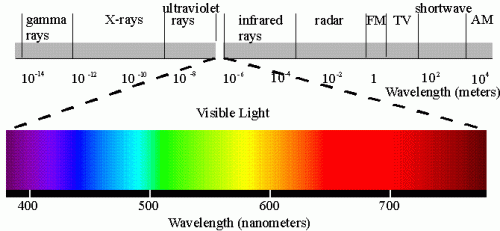
Thermal imaging cameras detect radiation in the infrared range of the electromagnetic spectrum (roughly 9,000-14,000 nanometers or 9-14 m) and produce images of that radiation, called thermograms. Since infrared radiation is emitted by all objects above absolute zero according to the black body radiation law, thermography makes it possible to see one’s environment with or without visible illumination.
Thermal Imaging – Infrared Spectrum
Thermal Imaging – Non-Destructive Testing
Thermal imaging is a non-invasive, non-destructive way of evaluating conditions below the surface. Thermal imaging gives a professional home inspector the ability to see beyond the normally visible. The amount of radiation emitted by an object increases with temperature; therefore, thermography allows one to see variations in temperature. When viewed through a thermal imaging camera, warm objects stand out well against cooler backgrounds.
A thermal imaging camera consists of five components: an optic system, detector, amplifier, signal processing, and display. The thermal imaging camera employs a series of mathematical algorithms. Since the camera is only able to see the electromagnetic radiation that is impossible to detect with the human eye, it will build a picture in the viewer and record a visible picture, usually in a JPG format. This picture is included in the report so the client can make an informed decision with all the available information.
During Energy Audits, Infrared Cameras are especially useful when conducting an Infrared Inspection of an attic or hot roof, “thermal by-passes” are located and can be identified for correction to stop the heat loss. Locating Air Infiltration Points – Along with a “Blower Door” the sources of air infiltration and drafts can be pinpointed. Where cold air comes in, and heat escapes; costing you money! The IR camera helps us identify those locations in association with the blower door. Infrared thermal imaging scans can easily verify insulation inside walls and ceilings. The camera will reveal where there is missing, settled, or wet and damaged insulation. As an added benefit, when we scan your home, we can also identify where cold air is coming through your walls.
Thermal Imaging – Moisture & Mould Detection
Mould, mildew and moisture detection are some of the common tasks that thermal imaging is used for during a home inspection. Where there is moisture, there is “evaporative cooling”. With the use of the IR camera, we can identify areas of moisture and potential breeding grounds for biological growth. Thermography or infrared detection is the leading tool in diagnosing water damage. Whether you are concerned about wasted high energy costs, leaks, smells or quality assurance Thermal Imaging can help identify potential problems.
Why Use Thermal Imaging
Inspecting commercial and residential homes using a thermal imaging camera is a powerful and noninvasive means of monitoring and diagnosing the condition of buildings. Thermal imaging technology has become one of the most valuable diagnostic tools for building inspections. A thermal imaging camera can identify problems early, allowing them to be documented and corrected before becoming more serious and more costly to repair.
Thermal imaging is also used for locating and identifying building failures, seeing what the normal eye cannot see. On a thermal image, problems are identified by changing colours. A thermal imaging camera is the one tool that can let you see it all. The Barrie Home Inspector was the first Home Inspector in Simcoe County to offer Thermal Imaging to his clients.
Are Green Energy Sources Better Than Others. Did you know that green energy can help you to pay less for your electric and gas bills? You can also use less money in cleaning products. Green energy can help you save a lot of money, if you know the right ways to use it wisely. Here are a few ways that you can use green energy today.
In order to save extra energy around the house, be sure to set your electronics to a power-saving mode when not using them. A power-saving mode will reduce the amount of energy spent by the device. This way, you can save energy and cut down the cost of the electric bill.
Use light bulbs that are energy-efficient. Conventional light bulbs use entirely too much energy and create a lot of heat. Energy-efficient bulbs last much longer and don’t give off that much heat. They can sometimes give off dimmer light, so make sure to use as many as you need in your rooms so you have comparable amounts of light.
Turn your water heater temperature down. Setting the temperature at 120 degrees will still allow steaming hot water to come out of your faucets and showers, but you will save on your energy bills. According to research, for each 10 degrees you lower your water heater thermostat, you can save about three to five percent on energy costs.
If you have a tank-style water heater that you aren’t prepared to replace yet, conserve electricity or natural gas by lowering its thermostat. By changing the thermostat from the factory-set 140 degrees to 120 degrees, the heater requires 6 to 10 percent less energy to keep your water hot.
Make sure your dishwasher, washing machine, and clothes dryer are full (but not overfilled) prior to using them. This saves a lot of water and detergent with each load of wash. Also check the settings on these machines. If you have a small load, make sure the setting for small loads is being used.
Measure the prevailing wind speed on your property before considering a wind generator. In order for wind energy to be cost-effective, you need a wind speed greater than 8.5 to 9 MPH at least sixty percent of the time. Any slower, and the turbine won’t spin fast enough to generate much electricity.
If you simply cannot afford to upgrade or replace any part of your home’s energy systems, then change your energy-using habits instead. For example, take short showers instead of long baths and only wash maximum capacity loads of clothes or dishes to cut back on water consumption. Likewise, shut off any lights or appliances before leaving a room.
Finding the green energy technology information is only the first step in creating a home that is qualified to be considered a green home. Find the products that you can make work in your home and reduce your bills, as well as, your carbon footprint by making these positive changes.
Understanding Your Home Inspection
by Angus Home Inspector
The Angus Home Inspector is a Certified Master Inspector. This Prestigious Designation assures you that you are trusting you Real Estate investment to a Knowledgeable Professional.
Roger Frost is also a Certified Building Code Official with the Ontario Building Officials Association. Having performed over 4,000 inspections ensures your home inspection will be exacting and detailed, giving you the information you need to make an informed decision when purchasing a home.
We are Available for;
- Prepurchase/Presale Inspection
- Pre-delivery of New Homes
- Property Management /Consulting
- Estate Homes
- Rural Homes
- Century Homes
- Multi-Residential
Your inspection report will contain pictures of every maintenance issue and every deficiency noted during the inspection. The inspection is not completed until you are aware of all the factors affecting your purchase decision and also that you completely understand the nature and complexity of the issues.
Buying a home is the biggest purchase most of us will make in our lifetime. The process can be extremely stressful and confusing. A professional home inspection significantly reduces your risk and makes the home buying process less stressful. Let us help you choose your home by calling Roger at 705. 795.8255.
The Building Code Act states that: no person shall construct or demolish or cause a building to be constructed or demolished in a municipality unless a permit has been issued therefore by the Chief Building Official. The Building Code Act also defines construct to mean the doing of anything in the erection, installation, extension, material alteration or repair of a building which also includes installation of a building unit fabricated or moved from elsewhere.
Each major phase of construction must be inspected by our Building Officials to make certain the work conforms to the Building Code, the building permit and the approved plans. The mandatory inspections required for your project will be indicated on the permit. Inspections do not happen automatically. It is your responsibility to ensure that either you or your contractor contacts the city to request an inspection at least 24 hours before work proceeds from one inspection stage to the next. Failure to have inspections performed may result in having to uncover and expose work for inspection or the commencement of legal action. Allow 48hrs notice for an inspection as specified by the building code.
Many Home Inspectors have very little training in their respective building code requirements, which can sometimes lead to them giving out misleading information. One item I am constantly hearing from clients is the home inspector who tells prospective buyers that there is a problem with insulation, deck construction or electrical GFCI outlets. What these individuals fail to realize is that a building only has to meet the building code requirements of when the home was built and not the current building code requirements that they have recently learned.
Basically the only time a building has to be updated is when there is a Change of Use or Occupancy or the Building comes under the Retrofit Section of the Fire Code for example.
A Building Permit would be required for any renovation or addition to a structure and all the requirements would then be addressed prior to Building Permit being issued.
A comment made by a rookie inspector, to one of my clients, that her attic insulation was inadequate was totally misleading as the requirement for her home was only R-19 and he made a statement that it should be R-32 at a minimum. So here we have a situation where this “home inspector” is commenting on insulation which is not based on fact or requirements but rather on his personal opinion based on his limited training.
When you are selling your home and are presented with a list of items the buyers want changed or improved, call your local Professional Home Inspector if you are in doubt about any of the requests. Any Professional Home Inspector will give you Free advice over the phone and you can then protect yourself from needless expenses you may incur from a Poor Home Inspection.
A building permit is required for any new building greater than 10m (108 ft), any addition to an existing building, any material alterations to an existing building which effects: the structural design of the building; mechanical; electrical; plumbing services (no limit on size of building); fire separations; exiting; fire protection systems; and the use of buildings or parts thereof.
If your Building Official finds that some work does not conform to the approved plans, he or she will advise (and, possibly, provide written notice) that the situation is to be remedied. If the violation is serious, a stop work order may be posted until the problem is resolved. Another inspection may be necessary before work is resumed.
Learn more about Commercial Building Inspections. Stop by Roger Frost’s site where you can find out all about The Alliston Home Inspector and what a Professional Home Inspector can do for you.
Choosing Your Home Inspector. Buying a house is the biggest purchase you’ll likely ever make. That’s why you want the best possible home inspector in your corner to tell you whether that cute Bungalow is your dream home … or a lemon with a rotting foundation, aluminum wiring and vermiculite insulation.
But first, how do you know if an inspector is rock-solid? There’s a lot riding on the person you choose, after all. “You’ve got one opportunity of having the home looked at by a professional who has professional training and professional experience to find defects. These are some of the top suggestions gathered from around North America on how to choose a Home Inspector.
A Lot of Organizations
There are tens of thousands of home inspectors nationwide today. That’s in Canada and US. Many inspectors were lured into the business by promises of easy money. No wonder would-be homeowners have trouble knowing whom to trust.
Unfortunately, there are not many requirements for someone to be licensed home inspector. “You can just hang your shingle and go for it.” Even Licensing does not solve problems, in fact is has created more some States where more people jumped on the “Home Inspection” bandwagon, because obtaining a simple license gave them “Respectability”.
Tip No. 1:
Don’t trust an inspector simply because he or she has a state or provincial license or certification. All states or provinces that issue licenses require training, but the training may be so minimal that it is ineffective.
Tip No. 2:
Look for an inspector who is associated with a professional inspection organization. This can help weed out the truly fly-by-night inspectors, but it won’t catch all the bad actors. There is an mixed bag of such groups, with wildly varying criteria for membership. In one, you can send them a $60 check and you’ll be a member.
Look for affiliation with groups such as NAHI, the National Institute of Building Inspectors, and the American Society of Home Inspectors. These are some of the most reputable inspector associations, and their Web sites have a “find an inspector” service to locate a member in your area.
You can also study several home inspection organizations’ criteria for membership: how many homes a would-be member must have inspected; how much — if any — continuing education is required; whether an exam is required for admission, etc. Each is a little different. Inspectors who are fully certified by ASHI, the nation’s oldest such group, with 5,700 members, are required to have completed at least 250 paid professional home inspections and passed two written exams, for example.
Tip No. 3:
Don’t just take your agent’s recommendation at face value. Real-estate agents often recommend inspectors to home buyers. But that arrangement doesn’t necessarily serve the home buyer well, since both agent and inspector have a financial incentive for things to go well: for the agent, a commission, and for the inspector, the possibility of repeat business from the agent. Still, experts suggest some ways to make sure your interests are served.
How To Protect Yourself
Don’t settle. Get more than one suggestion from your real-estate agent. Turner suggests asking for three inspectors’ names. Richardson says to ask for five.
Ask the tough questions. Ask the agent flat out, ‘Would you hire any of these to inspect your home, or your family’s home? This will put them on the spot. Also, ask the agent or others you know, “Who’s the deal-killer in this area? as quoted by many authors and real estate advisors Who’s the Real Estate agents worst nightmare inspector with a reputation for killing deals because he finds all of a home’s flaws. That’s typically who you want.
Tip No. 4:
Ask the hard questions. Once you’ve got an inspector in mind, start looking around his résumé and asking questions. In other words, inspect the Inspector.
Interview the inspector. Any professional will be happy to talk to you. Here’s what to ask:
Talk to me. First, the inspector should make time to talk to you and answer your questions. A true professional will just roll out the information without any hesitation.
Let’s see the résumé. Ask about the inspector’s credentials and experience. Generally speaking, “You should have had a hammer in your hand at some point in your background to have a good grasp of construction.” One Franchise company has this to say about experience, when asked:
I don’t have any construction experience, does that matter?
A: No, business and management acumen, computer prowess and the confidence to market your business and manage others are significantly more important. Home inspections are a learnable skill, especially when taught by the most experienced staff in the industry who will continue to provide you with on-going education and support. We also have an executive model where our franchisees can choose to hire inspectors so they can focus on the managing and marketing of the business. About 10% of our franchisees don’t do any home inspections at all.
Got insurance? Ask whether the inspector carries “errors and omissions insurance,” Also beware of added “Insurance Options” where some inspectors try and sell you a “insurance package” on your appliances or heating units.
Got a guarantee? “Do you offer a guarantee?” Most professional inspectors will offer a “Money Back Guarantee” of some description. This means they are confident enough in their abilities to guarantee them.
Get it in writing. Ask if the inspector puts his findings into a narrative-style report; that’s what you want – not just a long checklist. Usually most reports now include over all pictures of building and any deficiencies found.
Ask to see a sample; it’s often available on the inspector’s Web site. Look at it to assess whether you’re comfortable with the language and can understand it. Also see that the inspector is thorough, and covers all of the areas that the organization he belongs to says he will cover in its standards of practice, this will also tell you if inspector goes up on the roof or not.
Attend the Inspection Yourself. Before hiring the inspector, ask to come along when the home is examined. A BIG RED FLAG would be if they don’t want you to go on the home inspection with them. A home inspection usually takes 2 1/2 to 3 hours. Unless a team is examining the home, be suspicious of anyone who tells you it will take 45 minutes to an hour.
With a little investigating of your own, you’ll likely end up with a home that contains no expense surprises. And that just makes everyone happy
Typical Barrie Home Defects at Inspections. Poor grading is a typical landscaping issue which is commonly found during a home inspection. Sidewalks are especially prone to settling and directing water against the foundation of the home. Directing water away from your home should be your number one outside priority. Check all downspouts and other sources of water to ensure that all water is directed away from home.
In my experience roof shingles last on an average of 18 to 20 years on the average home. The south side roof shingles will typically deteriorate first as they are in contact with more sunlight than the remaining sides. Curling of shingles is the first sign that they will require replacement. Although there are many shingles which are advertised as 25 or 30 year shingles, it is unusual to see them last more than a couple of extra years when compared to regular shingles.
Electrical wiring issues is by far the most common problem found in most older homes with a renovated basement. The wiring issues are usually un-supported electrical cables, missing junction boxes and adding circuits to existing breakers in main panel. This is always an indication that the home owner has done the work and a licensed electrician should be called in to inspect and repair all the wiring. I will typically recommend that potential buyers ask for an electrical certificate for home which indicates that all wiring has been inspected and passed by licensed electrician.
Any renovation in your home is required to have a building permit. Part of the building permit process is having plumbing, structure, electrical and insulation inspected by your local building officials or electrical authority. When a renovation is done with out taking out a building permit you run the risk of un-seen problems coming back to haunt you and most likely costing a great deal of money to repair.
Exterior maintenance of your home can prevent thousands of dollars in needless repairs. Caulking seams in window sills and ensuring mortar is still in place on brick window sills can save a lot of repairs for a couple of dollars. Just caulking your asphalt driveway at joint where it meets your garage can prevent separation and sinking of driveway.
Attic insulation is commonly found to have been disturbed by trades people and home owners. When you do work in the attic and compact your blown insulation you should add insulation to ensure even coverage and un-necessary heat loss. Improperly installed pot lights are another commonly found issue which can create a huge energy loss in your home. It is important to install the proper pot light when installing in your insulation. The possibility also exists of starting a fire if not properly installed.
Exterior chimney flues are often cracked and brick is spalled simply because home owner did not install a rain cap on their chimney. Water can penetrate small cracks and in the winter season this water freezes and expands causing further cracking. If left un-checked eventual you will be replacing your whole chimney. Older masonry chimney caps do not have a drip edge and this allows water to get underneath cap and start penetrating your brick. It is a wise investment to have your chimney check every year to find cracks before they become expensive repairs.
Call Roger Frost, the Barrie WETT Inspector for all your insurance company inspections.
Victoria Military Relocation Experts
Call Geoff and Jodi for your next house hunting trip and enjoy the Peace of Mind of dealing with Experienced Professionals. 
If you ask anyone connected to the Victoria, BC real estate market, or any of the thousands of people who have listed their Victoria properties for sale with Geoff McLean over the years, they’ll confirm that one of his defining characteristics is his integrity.
Geoff approaches his real estate vocation with honesty and straightforwardness. As a husband, father and homeowner, he understands the family/work balancing act that everyone negotiates. At the heart of his service is Geoff’s respect for his clients, fellow Realtors and the industry.
Three generations of Jodi Baker’s family have been involved in the Victoria Real Estate industry. Jodi’s grandmother was a realtor in Victoria, her mother (Heather Wilde) is a realtor and Jodi grew up knowing that she would be a realtor too!
After attending grade school locally, Jodi enrolled at Camosun College, taking Business Administration and majoring in marketing. She graduated in 1991, the same year she was licensed as a Real Estate Agent and joined Re/Max Camosun.
Since then Jodi has been been building her career based on a desire to provide friendly professional service to people who want to sell or buy properties in Victoria, winning several awards along the way. In 2003 Jodi joined Geoff McLean and Associates, and she enjoys being part of his team of real estate experts.
Why Buy a Home in Victoria
- The beautiful gardens of Victoria have earned it the nickname, ‘the city of gardens.’ Thanks to the broad range of plants that grow there, these gardens are world-famous.
- Victoria has hundreds of kilometers of bicycle routes, lanes, and paths, and is known as the cycling capital of Canada.
- Thanks to its clean waters and the diversity of surrounding marine life, Vancouver Island is perceived as one of the best cold-water diving sites globally.
First Time Home Buyers
Buying a home can be daunting and scary for the First Time home buyer. There are so many steps, tasks, and requirements, and you may be worried about making an expensive mistake. Few joys can match the pride of owning a home, but the responsibility can also come with sacrifices – from the financial commitment to the required care and maintenance. You’ll want to be sure both fit within your current or preferred lifestyle.
Buying your First Home is going to be one of the most significant and largest purchases of your life. Do it right with the help of a Victoria Realtor who has the knowledge and expertise to avoid putting you in a home that you will regret buying. Geoff or Jodi can help you find the right amount you can afford when buying a home.
Buying a Home in Victoria or Esquimalt
REALTORS® are members of The Canadian Real Estate Association who subscribe to a strict Code of Ethics and high Standards of Business Practice. Members of the Victoria Real Estate Board are members of both the
British Columbia and Canadian Real Estate Associations.
The following is a list of services you can expect to receive from a REALTOR® when you buy a home:
• A REALTOR® will fully explain the details of your working relationship (called “agency”) so that you are clear as to when a REALTOR® is working for you or for the seller.
• A REALTOR® has access to hundreds of current listings of homes for sale because of a co-operative system called the Multiple Listing Service® (MLS®). A REALTOR® can provide you with a customized list of homes that best your needs — size, style, features, location, proximity to schools, hospital and shopping, etc. – and then make arrangements for you to view those homes that appeal the most.
• A REALTOR® will help you determine how big a home you can afford. Assessing the many financial alternatives is an important consideration when buying a home. REALTORS® are familiar with the local lending market and can offer helpful advice.
• A REALTOR® has no emotional ties to any type or style of home and can be objective in pointing out the merits of one home over another.
• A REALTOR® will have information on zoning changes, taxes, utility costs, school and recreation services that could affect your decision to buy a home in a specific area.
• A REALTOR® will assist you in negotiating the terms of your purchase. Presenting offers and handling counter offers can be a nerve-wracking process for someone who is not experienced in the art of negotiating.
• Finally, a REALTOR® will advise you of the legal process required in obtaining title and taking possession of your property. The costs associated with buying a home such as insurance, mortgage registration and legal fees will be explained in detail.
A REALTOR® ‘s knowledge and skill can help in many ways to make the experience of buying a home a pleasant
and rewarding one for you and your family.
Victoria Real Estate
Welcome to the City of Victoria! Victoria is the capital city of British Columbia and is a city that is known for its temperate climate, natural beauty, and recreational activities. Victoria has a population of roughly 83,000 people (2018) and serves as the metropolitan core of the region of 360,000 people (2018). The City Of Victoria receives over 3 million visitors annually. On average Greater Victoria receives 2,183 hours of sunshine a year and roughly 66.5 centimeters of rain each year. Around Victoria are 1,600 signature hanging baskets that are on display throughout the city each summer.
Esquimalt Real Estate
Welcome to the City of Esquimalt! Esquimalt is home to the Canadian Forces Base (CFB Esquimalt) and is Canada’s Pacific Coast naval base. Currently CFB Esquimalt has 4,411 military personnel and 2,762 civilians that work on the base (2018). Esquimalt has many beautiful water front locations such as Saxe Point, Macaulay Park, Bullen Park and many more. Esquimalt is only 4km away from downtown Victoria and has a beautiful walkway along the water called the Songhess Walkway.
Military Relocation Realtor for Victoria and Esquimalt
Geoff and Jodi are your Local Brookfield ‘BGRS’ approved experts, and have years of experinece in relocating Military and RCMP families to Victoria BC and Esquimalt. As members of Canada’s Lagest Military Relocation Program they have the training and experience to ensure your next posting is as Stress Free as possible.
Visit Canada’s #1 Military Relocation Site
Contact Information
Roger Frost
Certified Building Code Official
Certified Master Inspector
Phone: 705.795.8255
Email Roger