
# Self-Testing GFCI Outlets
Ground Fault Circuit Interrupter (GFCI) outlets are an important electrical safety feature in modern homes. They are commonly found in bathrooms, kitchens, garages, laundry areas and other locations where electricity and moisture may create an increased risk of electrical shock.
Homeowners should periodically test their GFCI outlets to make sure they are operating properly. Of course, after spending a long day testing other people’s outlets during a home inspection, I have to admit that remembering to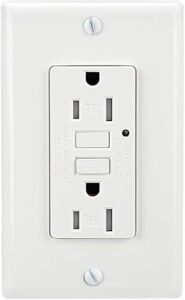 test my own is not always at the top of the list!
## What Is a Self-Testing GFCI Outlet?
Newer GFCI outlets are available with a self-testing feature. Instead of relying entirely on the homeowner to perform regular manual tests, these devices automatically monitor their ability to provide ground-fault protection.
The outlet performs periodic internal checks to verify that its protective components are functioning properly. Many models also retain the familiar **TEST** and **RESET** buttons so the homeowner can manually test the outlet.
If the device detects that it can no longer provide the required level of protection, it may shut off power to the receptacle and provide a visual indication, such as a warning or status light.
## Why Are GFCI Outlets Important?
A GFCI monitors the electrical current flowing through a circuit. Under normal conditions, the current travelling out on the energized conductor should correspond closely with the current returning on the neutral conductor.
If the GFCI detects an imbalance, it can indicate that some electrical current is travelling along an unintended path. In some situations, that path could involve a person coming into contact with electricity.
When a potentially hazardous imbalance is detected, the GFCI is designed to disconnect the circuit very quickly.
## Improper Wiring Can Be a Problem
During home inspections, improperly wired GFCI outlets are not uncommon. A GFCI device may be installed incorrectly, or downstream outlets that are intended to receive GFCI protection may not be connected properly.
Newer self-testing GFCI devices can provide additional safeguards and diagnostic features, but proper installation and wiring are still essential. If a GFCI outlet will not reset, repeatedly trips, shows a warning indicator or appears to be wired incorrectly, it should be evaluated by a qualified electrician.
## How to Manually Test a GFCI Outlet
Even when a self-testing GFCI is installed, the manufacturer may recommend periodic manual testing.
A typical test involves:
1. Plugging in a lamp or other simple electrical device.
2. Pressing the **TEST** button on the GFCI outlet.
3. Confirming that power to the outlet has been disconnected.
4. Pressing the **RESET** button.
5. Confirming that power has been restored.
If the outlet does not trip when tested, does not reset properly or continues to show a warning indication, it may not be providing the expected level of protection.
## A Small Device That Can Provide Important Protection
GFCI protection is one of the important electrical safety features I check during a home inspection. While no electrical device can eliminate every risk, properly installed and functioning GFCI protection can help reduce the danger of serious electrical shock.
If you are unsure whether the GFCI outlets in your home are operating correctly, or if an outlet repeatedly trips or will not reset, have the problem evaluated by a qualified electrician.
Electrical Service Boxes
DIY Electrical Problems in Home
Electrical Problems and Home Inspections
Aluminum Wiring in your Home
Common Problems found during Home Inspections
Certified Home Inspections Barrie