Understanding Your Septic Tank. The septic tank is buried, watertight container typically made of concrete, fiberglass, or polyethylene. It holds the waste water long enough to allow solids to settle out, forming sludge, and oil and grease to float to the surface as scum. It also allows partial decompositions of the solid materials. Compartments and a T-shaped outlet in the septic tank prevent the sludge and scum from leaving the tank and traveling into the leach field area.The most common leach field consists of a series of trenches containing perforated pipe surrounded by septic rock, or gravel, and covered with mesh and dirt. The effluent entering the leach field is partially absorbed into the soil and partially evaporated. the leach field should not be driven on or covered by a driveway or patio.
If your home’s plumbing system does include an on-site septic system, it is incredibly important to be aware of the signs of possible damage, along with the maintenance needed to prevent it. A damaged or clogged septic system can be costly to repair. It can also impose possible health risks for homeowners, tenants and neighbors. A failing septic system could be responsible for releasing wastewater and harmful bacteria and viruses, including E. coli.
There are many different types of septic systems ranging from what are called conventional in-ground systems to sand mounds and from spray irrigation systems to stream discharge systems. There are also seepage pits, cesspools, and homemade systems. This booklet is not intended to cover every situation, but is intended to give the homeowner an understanding of the concept of how a septic system works and a better understanding of a septic inspection.
The in-ground type of septic system uses a series of perforated pipes located below the ground surface. These pipes are placed in a bed of crushed stone or aggregate. The sewage flows over the crushed stone or aggregate into the underlying soil. The condition of this soil determines how well your septic system will operate and how large the absorption area needs to be. If the absorption area is too small and the soil is too tight as with clay soils, the liquid cannot soak into the soil fast enough causing the waste to either back up into the home or emerge at the ground surface. An early sign of waste emerging at the surface is “lush growth.” The saying “that the grass is always greener over the septic tank” isn’t true when it comes to a properly operating septic system.
How often should a septic tank be cleaned or pumped? The frequency for pumping a septic system depends on a number of factors; the average frequency is between two and four years. You can, in some cases, abuse a septic system and neglect to pump it for 10 or 20 years without any apparent problem. This would be like driving your automobile for 50,000 miles without changing the oil. You might get away with it, but you would certainly cause undue wear and tear on the engine. The same is true with a septic system. You may get away with not pumping the system for many years, but you will pay for it in the end by having to replace the absorption area.
When the soil conditions are right, an area of active microorganisms is formed where the waste enters the soil. As the waste slowly percolates through the soil the microorganisms continue to grow and feed on the harmful bacteria and viruses in the septic waste. The underlying soil continues to absorb and filter the waste. Four feet of soil is all that is needed to treat the septic waste in good soil conditions.
The Barrie Home Inspector always recommends that you have your septic tank pumped by a licensed installer who can give you a written assessment of the complete septic system.
THIS IS SERIOUS STUFF…….READ IT ALL AND SEND IT TO FRIENDS All Canadians should read this.
FROM: The Hon. Diane Finley P.C.M.P., Minister of Human Resources and Skills Development
I am pleased to respond to your electronic message which was forwarded to me by the Office of the Prime Minister the Right Honourable Stephen Harper regarding private member’s Bill C-428.
Another Rip Off Tax Payers Always Take the Hit. As you know Bill C-428 proposes to amend the Old Age Security Act to reduce the residence requirement for entitlement to a monthly pension from ten years to three years. This private member’s bill was introduced in the House of Commons by M.P. Ruby Dhallaa Liberal Opposition Member. As the Minister responsible I have been very clear that when this Bill comes forward we will strongly oppose it.
The Old Age Security (OAS) pension is paid to seniors in recognition of the contribution that they have made to Canadian society the economy and their community. The OAS program is non-contributory and is based solely on age and residence in Canada after the age of 18. The ten-year residence rule is consistent with many other countries that have residence or contribution requirements associated with their national pensions to ensure that benefits are given in proportion to years of residence or affiliation with their pension programs. With this in mind it is felt that the current ten-year residence requirement represents a balance between a reasonable contribution to Canadian society and the right to receive a lifelong pension.
It is estimated that reducing the ten-year eligibility requirement to three years would cost over $700 million annually in additional OAS and Guaranteed Income Supplement benefits. Given that the OAS program is funded entirely from general tax revenues this would be costly and place an additional burden on the Canadian taxpayer.
Yours sincerely The Hon. Diane Finley P.C.M.P. Minister of Human Resources and Skills Development
Don’t quit yet … Bill #C-428 [THANKS TO RUBY DHALLA AND BOB RAE] Only if you disagree with this Bill … Pass this message along. This bill should not have seen the light of day … And yet it will receive second reading at the next sitting of parliament. Please read the bill and make your own decision. If you disagree with the bill send this to everyone over the age of 50 in your address book …. Or those who may be turning 50 in a few years. Hopefully by letting your member of parliament know your feelings on the bill it will be defeated. If you agree with the bill you don’t need to do anything..
URGENT ATTENTION About Our OAS pensions Bill C-428 An Act to Amend the Old Age Security Act (residency requirements) Bill C-428 will allow recent immigrants to apply for OAS in 3 years instead of the existing 10. This bill had first reading in the house on June 18, 2009. It was seconded by Bob Rae! MP Ms Ruby Dhalla who introduced the bill represents the riding of Brampton whose population is mainly East Indian. Right now you have to have lived in Canada for 10 years in order to qualify for Old Age Security. She wants the time reduced to 3 years.
Thousands could come to Canada when they are 62 years old never having worked or contributed to this country’s tax system etc and qualify for full Old Age Security benefits. 10 years minimum is reasonable – 3 is not! Look this up Google C-428 and you will see this bill has only one purpose and that is to ‘featherbed’ a select group of people for votes. I certainly hope this bill does not get passed. It is about time we called our elected MP’s to ask them to NOT support this bill. Their response may be one factor in helping us determine who gets elected in the next election. Keep on reading and then ACT !
What Can You Do?
1. Spread the message to family friends and e-mail buds.
2. Write letters send e-mails to all your list and call Members of ParliamentIt is time Canada looked after it’s vets and long-term citizens before tossing OUR hard-earned money around on people who have no right to this money, never having paid taxes or contributed to our economy. If a family wishes to bring elderly relatives here and are willing to waive their own right to collect these funds in order that the elderly relatives can receive them … Fine. Otherwise do not expect the Canadian taxpayers to do it.
There are too many people abusing the generosity of the Canadian people. We need to stop this NOW! We, our children and our grand children currently owe the global investment community over $500 billion dollars … The sum of our accumulated National Debt that is never publicized.Now READ THIS..
Canada Pensions… Only in Canada
* It is interesting to know that the federal Government of Canada allows :a. A monthly pension of: $1,890.00 to a simple refugee
b. plus: 580.00 in social aid = for a grand total of: $2,470.00 monthly X 12 months =
$28,920.00 annual income
By comparison the Old Age Pension of a senior citizen who has contributed to the development of Our Beautiful Big Country during 40 or 50 years CANNOT receive more than :
a. $1,012.00 / month in Old Age Pension and Guaranteed Income Supplement x 12 months = $12,144.00 annual income
A difference of: $16,776.00 per year
Perhaps our senior citizens should ask for the Status of Refugees instead of applying for Old Age Pension.
Let us send this message to as many Canadians as possible and maybe the allowance of refugee could then be reduced to $1012.00 and that of our Canadian pensioners (who actually deserve it) raised to $2470.00 per month…the money that they have been paying in income taxes for 40 or 50 years AN INCREDIBLE NONSENSE !!!
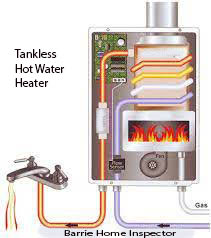
Why You Should Consider a Tankless Water Heater. If you are looking to replace your old, out-dated storage tank water heater, you will find any number of benefits to take into account if you’re contemplating transitioning to a tankless water heater. Tankless water heaters, also known as demand-type or instantaneous water heaters, provide hot water only as it is needed. They don’t produce the standby energy losses associated with storage water heaters, which can save you money.
You probably have heard the horror tales of folks who came home from work or vacation trips and discovered their houses flooded because their hot water heaters rusted through or malfunctioned in some other way.
Tankless water heaters work in an entirely different approach as compared to traditional units. Conventional units operate by retaining water in a tank and keeping that water at a relatively high temperature to ensure that it may be piped to the hot water faucet when it is turned on. Gas tankless water heaters, which use high-powered burners to quickly heat water as it runs through a heat exchanger, were 22 percent more energy efficient on average than the gas-fired storage-tank models in our tests. It could take up to 20 years to recoup the extra expense of installing a tankless water heater.
Tankless water heaters, in comparison, have sensors that identify when you’re using hot water and regulate the flow of water through your pipes to provide hot water in as little as two seconds! This means the heating mechanism is not continually working like in a conventional model, thereby saving energy and reducing your utility costs significantly. Finally, as the name implies, these heaters do not have a holding tank. The main advantages of tankless water heaters are a plentiful continuous flow of hot water (as compared to a limited flow of continuously heated hot water from conventional tank water heaters), and potential energy savings under some conditions.
Do you wish to convert that hot water heater closet to needed space? The tankless water heater is a fraction the proportions of a standard unit. It can be easily almost any place. Something to think about when selecting the placement is how long you’re prepared to wait for the hot water to reach your shower, washer, or wherever it is needed and whether or not the unit will be shielded from outside weather. As long as it’s correctly vented and wrapped ( if exposed to cold temperatures), a tankless water heater will perform efficiently in a garage. Just make sure that it’s impossible that a vehicle could contact or cause damage to it.
Hot water tanks, both conventional and tankless are inspected as part of a Barrie Home Inspection. Call the Barrie Home Inspector for a Risk Free home inspection.
Knowing and understanding the importance of smoke alarms in homes is a crucial part of keeping you and your family safe. Smoke detectors are an important part of any modern safe home. There are laws in Ontario that require any house or apartment should have them installed.
When a fire starts it has the ability to spread quickly possibly trapping and killing those inside. The news is filled with stories about fires that happened over night and the occupants were asleep and unable to get out of the burning building before succumbing to smoke inhalation. There are many reasons a fire will start. The cause of most fires is never fully understood until after the fire has been put out and it has been fully investigated. The speed at which a fire can start and spread is faster then anyone can imagine, that is the very reason why they are so deadly and cause so many fatalities every year.
Every home or apartment is required to have a smoke detector on every level and within 5 m of any bedroom. Having one smoke alarm will work for that area of the home but what about the rest of the home and sleeping areas. Buying one and placing it in the attic will do no good if the fire begins in the basement or another lower floor. In order for any fire prevention method using smoke detection as a safety measure to work there have to be adequate smoke alarms installed to provide early detection and warning.
Understanding The Importance Of Smoke Alarms In Homes. Once you have installed the correct number of detectors now you need to make sure they are in good working order. This maintenance is not as difficult or time consuming as it sounds. On the front of the alarm you will see a little button usually recessed and transparent. This is called the self test button, and its job is to make an audible beep telling you that it is operating correctly, this should be done monthly.
The self test is not the only maintenance these units need. Units that are battery powered will need to have those batteries replaced yearly. This is an inexpensive way to ensure that the alarm is adequately powered. Some alarms draw their power from the homes electricity directly. When buying these units make sure they have a battery installed as well as a backup in case the power goes out. These batteries require changing yearly as well.
These alarms are not ageless and will get old. Some home owners overlook this step citing the cost of replacing the old units for newer ones. This cost concern is understandable yet one should not overlook the benefits offered by fire detectors are far more important then their actual replacement costs. Newer combination smoke and carbon monoxide alarms have a set amount of years, usually ten, which is measured as soon as you install the battery. After 10 years alarm will function forcing you to replace the detector.
The importance of smoke alarms in homes is a key feature to properly ensure your families safety. It is important that you have the correct number of units to properly cover your home. You will also need to make sure these detectors are in good working order by doing some simple maintenance.
As part of the home inspection process the Barrie Home Inspector tests all smoke alarms and carbon monoxide detectors. In the home inspection report there will be noted any areas in which a smoke alarm or carbon monoxide detector is missing.
Choosing Your Air Conditioner. Air conditioners are a great investment for your home. Central air conditioners are more efficient than room air conditioners. In addition, they are out of the way, quiet, and convenient to operate. To save energy and money, you should try to buy an energy-efficient air conditioner and reduce your central air conditioner’s energy use. Resale value of a home with AC is significantly higher than a house without an air conditioner. The efficiency rating of an AC severely impacts the cost of using the unit. Seasonal energy efficiency ratio (SEER) is how air conditioners get rated depending on average cost and usage values. Choosing the right unit for your home depends on a few factors; such as, efficiency needs, costs of yearly operation, and reliability of the air conditioner. The higher the SEER rating, the lower the air conditioner costs to operate. The SEER rating of a unit is the cooling output in Btu (British thermal unit) range from a low of 13 to the highest possible rating of 20.
The SEER will estimate how much an AC will cost in annual usage. This Living in a part of the country with only seasonal air conditioning needs reduces usage costs. Residing in an area that is warm for a large majority of the year drastically increases yearly usage costs. Air conditioners will be labeled with the SEER rating and average costs. usage value is highly subjective depending on where you reside. Air conditioners help to dehumidify the incoming air, but in extremely humid climates or in cases where the air conditioner is oversized, it may not achieve a low humidity. Running a dehumidifier in your air conditioned home will increase your energy use, both for the dehumidifier itself and because the air conditioner will require more energy to cool your house.
Reliability of any AC unit must be a factor in deciding which is best for your home. The average AC should last approximately 15 years. Some units last only five to eight years, while others last upward of 20 years. Reliability of the unit affects initial price. Cheaper Air Conditioner units will initially cost less up front but will not last as long.
Deciding if you want a cheaper unit that doesn’t last as long, as the more expensive model is a personal decision. Models with a lower SEER rating are usually cheaper but cost more yearly. A more expensive unit will cost more up front, but will last longer. A decision if you want to pay more now or over the interim of use, is a choice you need to make before purchasing the AC. The majority of air conditioners come with a warranty. Warranties will help reduce costs if your unit breaks down.
Check reviews of different models and makes that you are considering. Your budget will help decide what price range is best for your home. Reviews will give you a good idea of cost and reliability of different air conditioners and if there are some models which have high repair costs. Choosing, the right air conditioning installer in Barrie ON for your home boils down to reliability, efficiency needs, and price of the unit.
The Barrie Home Inspector checks your a/c unit for any visible defects and ensures that adequate space has been left for ventilation. The amperage of a newer 13 Seer unit is typically lower than required for older units and your breaker should have been upgraded when unit was installed. The A frame in your furnaces plenum may require cleaning to ensure that it is working at its peak efficiency. If you have your a/c unit upgraded ensure your installer checks the evaporator coils condition.
Common Places Water Leaks and Why. Maintaining a home is not that easy. As a homeowner, you need to check everything inside the house to avoid problems that can affect your family in the future. One of these problems is leaks of water. Leaking water can not only damage your home; it also brings with it the threat of toxic mold growth. You do not want this to touch any of your children because this can make them sick.
Why it is often too late when you find out there is a leak? And if it’s already there, the damage is done. You spend hard earned cash on water leak repair and it’s not even funny. The reason for a water leak in your home is plain and simple: you forgot to routinely check your home for plumbing problems. Water is a universal solvent and it seeps through everywhere and anywhere. That is why, as mentioned, it is very important to give time to periodically inspect the insides of your home to avoid this nuisance.
How can you protect your family from this inconvenience? Here are several sources of water leaks common at any home. For your guidance: 1. Kitchen Sinks 2. Washing Machine Hoses 3. Water Heater Hoses 4. Bathroom Sinks and Tiles 5. Shower Heads 6. Toilet Bowl
The sink is a place that people never check. Look at how the pipes are under the cabinet. Older sinks may have the older style S trap, which is no longer permitted as it can siphon water out of trap allowing sewer gas to enter home. Drains often leak at clean out and shut off valves can also leak causing damage to floor of cabinet
Another area to watch out for is your laundry room. The hose on your washing machine can cause a lot of damage if not secured into drain. Remember though the your washer needs an air gap at the drain, so do not seal with duct tape etc. Washing machines over 5 years old should be checked at least once every 6 months for leakage. As equipment grows old, it becomes subject to wear and tear. Even a thin spray of water on your hose can cause a big problem in the future. Hot water tanks often start leaking at the pressure relief valve, which can start slowly and build up over time. In Barrie ON most hot water tanks are rentals and service for leaks is free.
The bathroom is the prime culprit for water leaks. Caulking is required on all floor joints and around your bathtub. Cracks can induce leaking and if it is an upstairs bathroom can cause mould and mildew growth in your ceiling. Any water leak has the potential to allow the growth of mould. Prevention is key and keeping a eye on your plumbing may save you hundreds or thousands of dollars in repairs.
The toilet is another common place for water leaks. Some people like to caulk their toilet to the floor but it is usually not a good idea as when seal leaks water is trapped and will rot out your floor. Look at the piping and shut offs at least one time every month. When the floor around the toilet is always wet you probably have a leaking seal. The only way to make sure you don’t get problems is to look over your plumbing.
During the home inspection process Roger Frost of Barrie Home Inspections checks all plumbing for leaks, poor supports, type of material, properly installed traps and runs all taps and fixtures to ensure that they are functioning properly. Jet tubs are filled up and tested to ensure that unit works and there are no leaks.
Fall Maintenance Tips for Home Owners. It’s that time of year again. The days are getting shorter and cooler. To ensure that your house remains in prime condition over the winter, a good weekend spent on preventative maintenance is a great investment. By making a thorough inspection of your home inside and out you can detect and repair problems before they become issues. This can save you time and costly headaches down the road. If there are repairs below beyond your comfort zone, hire a licensed Contractor to handle the job.
GUTTERS AND DOWNSPOUTS
Neglected gutters can lead to wood rot problems, pest infestations, wet basements, foundation damage and many other expensive complications.
1. Clean gutters and downspouts frequently throughout fall to prevent build up of leaves and other debris.
2. Be sure water is not coming down behind gutters and that all support brackets are securely in place.
3. If you have trees that overhang or are near your roof, install gutter guards.
4. Check to ensure water drains properly 5’- 6’ away from the foundation. If it doesn’t, settlement of your foundation, water penetration, and damage to your flatwork concrete can result.
5. Seal up any cracks in the driveway, sidewalks, and patio.
WOOD OR HARDBOARD SIDING
1. Seal around all of the penetrations. (ie-A/C refrigerant line, sump pump discharge line, etc.)
2. Check the vertical lap joints or vertical seams and if the existing caulk is cracked open, remove it, and caulk again. (Make sure you’re using paintable caulk.)
3. On hardboard panel siding, if the base edge is swelled or slightly rotted, now is a great time to install Cedar trim. Bevel the top edge of the Cedar trim at a 45 degree angle and nail it to the bottom edge of the panel siding making sure the trim hangs down about ½”. Caulk the top of the board, prime, and paint. This will prevent the siding from drawing any more water from capillary action and rotting.
4. On hardboard panel or lap siding, rotted siding should be replaced.
5. Keep the base edge sealed and painted. On new construction, the base edge of the siding where the lower roof meets the upper wall is almost never painted.
6. Keep the siding painted. Regular exterior paint usually lasts 4-6 years. There is higher grade exterior paint that can last upwards of 20-30 years. It’s like painting with thick mud, but lasts great!
WINDOWS AND DOORS
1. Check around the window frames inside and out for potential leaks. Caulk any visible gaps.
2. Inspect and repair any loose or damaged window locks, latches or door frames.
3. Check around all exterior doors for gaps. If it’s sunny look for daylight around the door. Install weather stripping to prevent drafts and lower heating bills.
4. If you have older windows check around those for gaps and weather strip as needed.
5. Wood casement windows notoriously are either never stained on the bottom edge of the window or the stain becomes worn off. Once this wood is left exposed, it doesn’t take long for it to rot out. Open those windows and stain that exposed wood.
HEATING SYSTEMS
Do you remember the last time your furnace was serviced? Most people don’t and neglected furnaces lose efficiency and may have a cracked heat exchanger.
1. Have your heating system cleaned, serviced, and evaluated by a licensed HVAC Company.
2. Replace the filter in your furnace on a regular basis. This is the #1 cause of cracked heat exchangers.
3. Check for leaks around the duct joints. Taking time to seal any gaps with heat tape or duct mastiff can help you lower your utility bills. I’ve found disconnected ducts that were blowing conditioned air into crawlspaces and attics.
PLUMBING
1. If you have any pipes that run through unconditioned spaces such as crawlspaces or garages, take time to thoroughly insulate them. If your supply pipes have produced icy cold water during the past winters, they may be in danger of freezing. If you have a bathroom that is built over a cantilevered wall or over a deck, house wrap that is sealed properly is critical to prevent air flow while insulation helps keep the conditioned space warm.
2. Disconnect all garden hoses. Even frost-free spigots will freeze if the garden hose holds water in the pipe.
3. Remember to winterize the sprinkler system. If you have a system that drains automatically via gravity, then you need to make sure the valves are turned diagonally and the drain valve has been fully drained. If your system requires the lines to be blown out, get it done before the first freeze. There’s nothing worse than turning on a sprinkler system after a hard winter and finding the lines have burst.
CHIMNEY AND FIREPLACE
Before you fire up your fireplace or stove, have it cleaned and serviced by a Certified Chimney Sweep. Go to the Chimney Sweep Institute of America’s website at www.csia.org to find a Certified Sweep in your area. In 2009, 21.3% of the chimneys I inspected were breached with either cracked or shifted liners. These conditions pose a threat of carbon monoxide poisoning or catching your home on fire. Numerous ones had heavy creosote buildup, inadequate and/or cracked crowns, missing caps, spauled brick, and deteriorated mortar joints.
SMOKE AND CARBON MONOXIDE DETECTORS
Make sure you have smoke and carbon monoxide detectors installed on every level of the home. Change the batteries in all the smoke and carbon monoxide detectors and check them frequently. Make sure you install CO detectors with peak level buttons so you can check the highest level since the last time you pushed the button as manufacturers have them calibrated to go off at 50-70 ppm of CO gas when long-term exposure to only 8 ppm can be deadly.
DRYER VENTS
1. When cleaning the dryer vents, take them apart and clean them out by running water down the vent pipe if possible. You’ll be amazed at how much lint is caught in the piping. If the dryer vent is encased in a finished wall or ceiling where removing it isn’t possible, hook up a leaf blower and force a high velocity of air through it to blow out the lint.
2. Unplug your dryer, then slide the lint trap out and remove the screws holding the insert that your lint trap slides into. Once this is off, reach your hand into the bottom of the dryer and remove all of the excess lint you can grab. I did this on ours and removed about a basketball sized pile of lint that had been trapped inside the channel of the dryer!
3. Make sure to clean your lint trap off with soapy water. Film can build up on this that blocks airflow making your dryer run much longer to dry your clothes. Don’t believe me, run water over your lint trap and see if it holds water like a bowl. Surprise!
4. Make sure the end of the dryer vent doesn’t have a mesh on the outside. Lint will clog this up very quickly.
ATTIC VENTILATION
For proper attic ventilation, the square footage for the intake vents needs to equal the exhaust vents. Rule of thumb is a home should have a soffit vent every 8’. Continuous soffit vents for intake and continuous ridge vents work best. In 2009, 49% of the homes I inspected had inadequate attic ventilation. Poor attic ventilation leads to higher utility bills, moisture building up in the attic space, faster wear-n-tear on your shingles, and it also voids your manufacturer’s warranty on those shingles. I’ve ran across moisture so heavy in attics that the entire bottom side of the roof deck was black with mold.
1. Pop your soffit vents off and hose the Cottonwood or any other debris off them. Most are installed with small screws or nails and can be easily taken off with a screwdriver. If removing them isn’t an option, take a leaf blower and blow up into the vent. If you could take them off, before you reinstall them, look up in the opening to make sure the baffles or air channel hasn’t been squished. There should be about 1” of space between the roof deck and the insulation here. If the insulation is tight to the roof deck where your soffit vent is located, air is not able to enter the attic rendering that soffit vent useless. Take a broom handle and slide it up along the roof deck and make the 1” air channel again.
2. Explore your attic. If you see mold growth, stains on your rafters, darkened areas on your roof deck, rust on the nails poking through your roof deck, or can smell a musty odor, then you most likely have inadequate attic ventilation. (If you look in the cold of winter and see frost buildup on the nails or roof deck, then you know you have poor attic ventilation also.) If your attic ventilation is inadequate, hire a licensed Roofing Contractor to have it corrected. There are numerous solutions depending on what you already have for attic ventilation and what upgrade would work best for your home.
CRAWLSPACE VENTILATION
1. At the end of Fall, close up your crawlspace vents. This prevents cold air from entering and freezing your pipes and helps keep the rooms above the crawlspace warmer.
2. Re-open the vents in the Spring. Having them open during the Spring, Summer, & Fall helps reduce moisture buildup if you’re in colder climates.
What is Radon Is It in Your Home?
Radon is a gas produced by the radioactive decay of the element radium. Radioactive decay is a natural, spontaneous process in which an atom of one element decays or breaks down to form another element by losing atomic particles (protons, neutrons or electrons). When solid radium decays to form radon gas, it loses two protons and two neutrons. These two protons and two neutrons are called an alpha particle, which is a type of radiation. The elements that produce radiation are referred to as radioactive. Radon itself is radioactive because it also decays, losing an alpha particle and forming the element polonium
Elements that are naturally radioactive include uranium, thorium, carbon and potassium, as well as radon and radium. Uranium is the first element in a long chain of decay that produces radium and radon. Uranium is referred to as the “parent” element, and radium and radon are called “daughters” or “progeny.” Radium and radon also form daughter elements as they decay. The progeny of radon are called radon decay products, or RDPs.
The decay of each radioactive element occurs at a very specific rate. How fast an element decays is measured in terms of the element’s “half-life,” or the amount of time for one-half of a given amount of the element to decay. Uranium has a half-life of 4.4 billion years, so a 4.4-billion-year-old rock has only half of the uranium with which it started. The half-life of radon is only 3.8 days.
If a jar were filled with radon, only half of the radon would be left after 3.8 days. But the newly-made daughter products of radon (or RDPs) would also be in the jar, including polonium, bismuth and lead. Polonium is also radioactive. It is this element which is produced by radon in the air and in people’s lungs that can hurt lung tissue and cause lung cancer.
Radioactivity is commonly measured in picocuries (pCi).
Because the level of radioactivity is directly related to the number and type of radioactive atoms present, radon and all other radioactive atoms are measured in picocuries. For instance, a house having 4 picocuries of radon per liter of air (4 pCi/L) has about eight or nine atoms of radon decaying every minute in every liter of air inside the house. A 1,000-square-foot house with 4 pCi/L of radon has nearly 2 million radon atoms decaying inside it every minute.
Radon levels in outdoor air, indoor air, soil air and groundwater can be very different. Outdoor air ranges from less than 0.1 pCi/L to about 30 pCi/L, but it probably averages about 0.2 pCi/L. Radon in indoor air ranges from less than 1 pCi/L to about 3,000 pCi/L, but it probably averages between 1 and 2 pCi/L. Radon in soil air (the air that occupies the pores in soil) ranges from 20 or 30 pCi/L to more than 100,000 pCi/L; most soils in the United States contain between 200 and 2,000 pCi of radon per liter of soil air. The amount of radon dissolved in groundwater ranges from about 100 to nearly 3 million pCi/L. Natural Radiation Exposure
Since the beginning of time, all living creatures have been exposed to radiation. We live in a radioactive world. There are many natural sources of radiation which have been present since the Earth was formed. In the last century, we have added somewhat to this natural background radiation with artificial sources. However, the naturally occurring sources contribute about four to five times more radiation than human-made sources.
The three major sources of naturally occurring radiation are:
• cosmic radiation;
• sources in the earth’s crust, also referred to as terrestrial radiation; and
• sources in the human body, also referred to as internal sources.
Cosmic
The Earth and all living things on it are constantly bombarded by radiation from space, similar to a steady drizzle of rain. Charged particles from the Sun and stars interact with Earth’s atmosphere and magnetic field to produce a shower of radiation, typically beta and gamma radiation. The dose from cosmic radiation varies in different parts of the world due to differences in elevation and to the effects of the Earth’s magnetic field. Cosmic radiation comes from the Sun and outer space, and consists of positively charged particles, as well as gamma radiation. At sea level, the average cosmic radiation dose is about 26 millirems (mrem) per year. At higher elevations, the amount of atmosphere shielding cosmic rays decreases and, thus, the dose increases. The average dose in the United States is approximately 28 mrem per year.
Terrestrial
Radioactive material is also found throughout nature. It is in the soil, water and vegetation. Low levels of uranium, thorium and their decay products are found everywhere. This is called terrestrial radiation. Some of these materials are ingested with food and water, while others, such as radon, are inhaled. The dose from terrestrial sources also varies in different parts of the world. Locations with higher concentrations of uranium and thorium in their soil have higher dose levels.
The major isotopes of concern for terrestrial radiation are uranium and its decay products, such as thorium, radium and radon.
There are natural sources of radiation in the ground, rocks, building materials and potable water supplies. Radon gas is a current health concern. This gas results from the decay of natural uranium in soil. Radon, which emits alpha radiation, rises from the soil under houses and can build up in homes, particularly well-insulated homes. In the United States, the average effective whole-body dose of radon is about 200 mrem per year, while the lungs receive approximately 2,000 mrem per year.
Internal
In addition to cosmic and terrestrial sources, all humans are born with naturally occurring radionuclides, such as Potassium-40, Carbon-14, Lead-210, and other isotopes. The variation in dose from one person to another is not as great as the variation in dose from cosmic and terrestrial sources. The average annual “dose” from internal radioactive material is about 40 mrem.
Ionizing Radiation Exposure to the Public
This chart shows that of the total dose of about 360 millirems per year, natural sources of radiation account for about 82% of all public exposure, while man-made sources account for the remaining 18%.
Government of Canada Radon Guideline
Did you know?
The Canadian guideline for radon is 200 becquerels per cubic meter, If the radon level is found to be high, it can be fixed.
Health Canada collaborated with the Federal Provincial Territorial Radiation Protection Committee (FPTRPC) to review the health risk from exposure to radon. The risk assessment is based on new scientific information and was the subject of broad public consultation. Using the risk assessment and feedback obtained from the public consultation, the Government of Canada is updating its guideline for exposure to radon in indoor air. This updated guideline provides advice that is more broadly applicable and more protective than the previous FPTRPC guideline.
The Minister recommends that
• Remedial measures should be undertaken in a dwelling whenever the average annual radon concentration exceeds 200 Bq/m³ in the normal occupancy area.
• The higher the radon concentration, the sooner remedial measures should be undertaken.
• When remedial action is taken, the radon level should be reduced to a value as low as practicable.
• The construction of new dwellings should employ techniques that will minimize radon entry and will facilitate post-construction radon removal, should this subsequently prove necessary.
• In addition to residential homes, the term “dwelling” in this guideline also applies to public buildings with a high occupancy rate by members of the public such as schools, hospitals, long-term care residences, and correctional facilities. The following settings are excluded from this guideline:
o Uranium mines, which are regulated by the Canadian Nuclear Safety Commission;
o Other mines (e.g., fluorspar mines), which are regulated by provincial mining authorities; and
o Other workplaces which would be addressed by existing guidelines for naturally occurring radioactive materials (NORM). Details are given in theCanadian Guidelines for Management of Naturally Occurring Radioactive Materials (NORM) and a copy may be viewed or downloaded.
• The “normal occupancy area” refers to any part of the dwelling where a person is likely to spend several hours (greater than four) per day. This would include a finished basement with a family room, guest room, office or work shop. It would also include a basement apartment. It would exclude an unfinished basement, a crawl space, or any area that is normally closed off and accessed infrequently, e.g., a storage area, cold room, furnace room, or laundry room.
• The aim is to remediate and reduce the radon concentration to less than 200 Bq/m³. If the radon concentration is found to be greater than 600 Bq/m³, the remedial actions are recommended to be completed in less than a year; between 200 Bq/m³ and 600 Bq/m³, the remedial actions should be completed in less than two years.
• “As low as practicable” refers to what can be achieved with conventional radon reduction methods in a cost-effective manner. This is consistent with the ALARA (As Low As Reasonably Achievable) principle, whereby reasonable efforts are made to maintain radiation exposures as low as possible, with social and economic factors taken into consideration. In most situations, a final level less than 200 Bq/m³ will be readily achievable. In a small number of cases, it may happen that the application of all reasonable remediation techniques will still leave a residual radon level greater than 200 Bq/m³. It is not the intention of this guideline to recommend excessive or unreasonable remediation costs in order to achieve a marginal increase in benefit. Such situations should be evaluated on a case-by-case basis.
• This Government of Canada guideline is based on the guidance approved by the FPTRPC. The guideline is based upon current scientific understanding. It will be reviewed and updated as appropriate. Further information on the Federal Provincial Territorial Radiation Protection Committee is available.
Brought to you by the Barrie Home Inspector – Your Radon Specialist for Barrie, Alliston, Orillia, Midland, Penetang, Bradford, Newmarket and Aurora
Recently I had my heating ducts cleaned in my house after finishing a renovation project. The duct cleaning company used a video camera to inspect my ducts before and during cleaning, what a sight to behold! There were pieces of drywall left over from the original construction and of course lots of dust. I talked to many companies prior to choosing Anderson duct cleaning, and as they explained, the main difference is two fold; one if you don’t use a service that actually contacts all the areas of your ducts you will not remove the dust that is attached to your ducts, and two; using a camera guarantees that all the dust and debris is being removed. Shawn, the owner, also gave me a great tip, when doing any kind of work in your home that can generate dust, close off your cold air returns to stop any dust from entering your duct work.
A typical house contains dust from pollen, spores, pet dander, lint, bacteria, etc. Even regular home activities like cooking or dusting add to the dust in the air inside the house. Such dust particles results in irritation of eyes and on entering the respiratory system, may cause respiratory disorders, damage to the lungs, or in unique cases, even cancer.
I now have two transparent inspection plates in my furnace, one on the cold air return and the other on the supply side duct work. As Shawn explained, after the major duct cleaning, I will now only have to have my cold air ducts cleaned when I can visibly see dust starting to collect in the duct work. Considerably cheaper than having whole system cleaned. The secret to keeping your supply side duct work clean is using a proper air filter. Shawn recommended staying away from cardboard edged filters as they often collapsed inside the cold air return and allowed dust and contaminates to pass.
In order to keep the quality of the air inside the home healthy, good quality furnace filters for your furnace unit should be used. There are various types of filters available on the market. These can be disposable, reusable or refillable. They’re usually made from materials like fibreglass, metal, man-made or natural fibres. The efficiency of a filter is decided by fibre size, fibre density, airflow rate and particle diameter. Different types of filters available in the market are:Panel Filter- These types of furnace filters commonly consist of 1” fibreglass filter installed in the ducts. However, these furnace filters are not very effective in removing dust from the air, as its primary function is protection of the internal fan and minimizing dust on the heating coil. These are a very basic filter and can trap only larger particles from the air.
Washable/Reusable Filters- These are meant for extended use, and with regular cleaning and maintenance serve a very long life. Their downside is that it is nearly impossible to get completely cleaned and therefore adds resistance to the airflow. These types of furnace filters are also not very effective in trapping very small particles.
Pleated Filters- These are a modified kind of panel filters that have pleats or folds to increase its surface area. This design change makes it more efficient at trapping dust particles due to increased surface area. However, here too, the furnace filter starts resisting airflow once it starts collecting dust particles and thus should be replaced regularly.
High Efficiency Pleated Filters- These filters have an additional component of electrostatic charge that is designed to capture extremely small particles and various allergens, which make-up 99% of the particulate composition of the air. However, even these should be changed at regular intervals to maintain the air quality, and the airflow. Alternatively, refillable furnace filters are also available in this type.
High Efficiency Particulate Air (HEPA) Filters- These are extended filters that are able to remove sub-micron particles with high efficiency. HEPA filters have corrugated separators that have the core filters folded back and forth over it. This gives strength and also facilitates air passage between the pleats. However, these types of filters are not designed to fit most of the standard furnaces, as they require a separate system that includes a fan and a filter.
Choosing an air filter can be a daunting task with the number of filters and varying prices. One tip is common with all the experts that I read and watched on TV, if you can see through your filter then it no good. Most recommended the pleated type of filter which gives you more surface area of filter. These filters can then be chosen by the size of particulates that they will pass. The more particulates they filter the more expensive they become. Electrically charged filters were recommended to be one of the better filters as they also come in a washable model. My particle model has a pretty standard 16 X 25 X 1 inch filter but there are cartridge filters available that are up to 5 inches thick.
Electronic air filters charge the particles as they pass which then attracts them to the filter. These filters can then be removed and cleaned in your dishwasher. Both the larger cartridge filter and the electronic air filter have to be custom fitted to your furnaces cold air return.
Remember to periodically to check your furnace filter as the more particulates they collect the more frequently they should be changed as they will affect the air flow to your furnace.
Real Estate Market in Innisfil. Today’s market for buying and selling homes if very competitive and you will want to ensure you have picked the best possible real estate agent to represent you. Here are some tips we have gleaned from some professionals.
Does your professional Realtor provide a staging service for his or her listings, many do in this competitive market. What information did your agent bring to your home prior to listing? How many agents are in his office, how many listings does he currently have? There are many people who are doing “on the job training” make your agent isn’t one of them.
How is your Realtor intending to market your home. What type of ads and how many open houses will they be having. It is always better to have an understanding on how the process will take place prior to listing, then there is no confusion.
When listing your home ensure you are using the current market conditions and not a two year old appraisal that does not reflect the current market prices. Mortgages rates are low and vacancy rates are declining which is good news for investors and sellers of properties.
Many people try and save money by utilizing the same Realtor and will even use a Home Inspector recommended by the Realtor. This saving can have dire consequences when you don’t have someone whose only duty is too look after your interests. Pay for the services of a professional and they will ensure your interests come first and foremost.
When buying a “used” home or property it is very important to ensure all work was done by qualified trades persons and all permits were taken out. Patio’s and decks are often erected illegally without using the proper building techniques or materials. You could end up paying to remove structure and erecting a new one if your local building authority inspects your property.
Visit Innisfil ‘s Real Estate agents site to find a professional Realtor suited for you.