Home inspection by Barrie Home Inspector. A home inspection is a limited, non-invasive examination of the condition of a home, often in connection with the sale of that home. The inspector prepares and delivers to the client a written report of findings. The client then uses the knowledge and information contained in his home inspection report, to make informed decisions about the home they are purchasing. The home inspector describes the condition of the home at the time of inspection but does not guarantee future condition, efficiency, or life expectancy of systems or components.
A home inspection consists of a visual inspection of your homes major components and fixtures. The home inspector will operate fixtures and make a note of any deficiencies. This will all be included in a report detailing all problems found.
Your home inspection report, prepared by the Barrie Home Inspector will include a review of your heating system, electrical system, air conditioner, interior plumbing, roof, attic visible insulation, basement, foundation and any visible structure. The inspection will also include Free Thermal Imaging scan of home.
When scheduling the home inspection it is recommended you attend the whole home inspection when possible. This is a good opportunity to learn where all the shut offs are for furnace, hot water tank, main water shut off, electrical shut, fireplace shut off, and the main water shut off for the home. You can take this opportunity to ask questions and you will be shown any deficiencies at the time the inspector finds them, giving you a great opportunity to learn fully about the cause and effect of the deficiency.
A picture is worth a thousand words. This is why we go over your report in a slide show at the end of the inspection. We also put your report online in a fully descriptive format which gives you a picture of every defect and a brief description of problem and a recommendation on how to fix or deal with the deficiency.
Barrie Home Inspections offers a 100% Money Back Guarantee on every residential and commercial building inspection. They also offer Free Thermal Imaging scans with every inspection. As a Certified Building Code Official and a former Registered Builder with Hudac his experience far exceeds that of the competition. With over 4,000 building inspections the Barrie Home inspector should be your first choice when wanting to protect your investment.
Observations for Home Energy Audits
Observational Diagnostics, Section One
There are many Observational Diagnostic techniques and experiential knowledge that have been learned by many individuals through the time that they spend in buildings which, in general, may not have made its way into the typical building evaluation resource materials. This Observation Diagnostics, Section One document was created as a way of collecting and disseminating an initial set this useful knowledge for those interested in developing their building diagnostic skills. This document is also a beginning effort to bring some key pieces of information together in one place from a dispersed set of resources.
Combustion
Fan or building caused negative pressure can cause spillage of flue gases, accelerated introduction of carbon monoxide into the conditioned space, and flame roll out from
atmospherically vented combustion appliances that are located within the negative pressure field. For unvented heaters and gas ranges that have correct combustion adjustments the dominant concern is the amount of water vapor contained in the by-products of combustion which can be the equivalent of one gallon of water per 100,000 Btus burned. The dominant safe combustion feature built into direct vent furnaces and water heaters is that they are atmospherically uncoupled from conditioned space.
HVAC Systems
When trying to determine if the air handler that is connect to a forced air duct system is a heat pump look for items that can indicate an alternative system. If gas piping for propane or natural gas, fuel lines connected to a fuel oil tank, or water piping connect to a water heater are attached to the air handler, it is not a heat pump. If there is a heating and cooling thermostat and an outside compressor unit connected to the air handler through a refrigerant line set you are close to your identification. The last item to confirm is that the compressor runs during the heat mode and thus you have confirmed that heating is not provided solely by electric strip heat. For an air handler connected to a forced air duct system you can determine that it is an aerodynamically uncoupled, 90% plus efficient furnace system if there is a gas line connected to the air handler and there are two PVC pipes connecting the furnace with the outside environment. To fully document a split system, furnace and air conditioner forced air heating and cooling system you need to find and record three model number plates, one on the furnace, one on the a/c coil, and one on the compressor. A name plate on a gas furnace will include a variety of information including among other items the input Btu/hour, temperature rise range, type of gas, model number, manufacturer name, and manufacture date. An 80% plus efficient natural gas furnace can be identified by observing that is has a fan on the furnace that draws a metered volume of combusted gases through the heat exchanger. It will not have a drain to remove combustion condensate, have an open draft diverter, or be connected to one or two PVC pipes. A “package” gas furnace and air conditioning equipment unit is designed to be located outside the building and can be found placed on the ground or on the roof depending on local practices. It should not be located in a close crawl space, in a vented attic, or inside a mechanical room.
Ductwork
Incorporating building cavity air paths into a forced air duct system is most often associated with the largest amount of measured duct leakage. In regions where air conditioning is used it is not uncommon to find insulated supply duct systems, which are located in unconditioned spaces, on which the exterior vapor retarder has not been completely sealed. The most damaging potential outcome is that water vapor can enter the duct insulation and condense on the surface of the supply duct and drain down to the inside surface of the vapor retarder where it cannot escape. Thus it saturates the duct insulation resulting in insulation with very little R-value. The simplest method that can be used to identify the presence of condensed water vapor in duct insulation during the cooling season is to place the back of your hand against the vapor retarder at the bottom of the duct and feel both a cool temperature and the weight of water in the duct insulation. The simplest method that can be used to identify the presence of duct liner insulation inside a sheet metal duct system is to thump on the metal duct and listen for a dull sound.
The four most common types of material used to convey supply air in duct systems for homes are flex duct, thin gauge metal, duct board and building cavities. Inflatable tubes are being used in some commercial establishments but are not in general use in homes.
The best indicator of previous duct sealing is that mastic is present for a representative sample of connection locations across the return ducts, air handler, and supply ducts. A customer showing a receipt for a new system, the fact that a service tech has been on site, or that there is mastic at the air handler will not give you the information that you need.
Foundation Types
Stairs leading from the home’s main floor to a below grade space indicate that the home is constructed on a basement foundation.
To determine if a home has a crawl space foundation look for the presence of a crawl space entry. Depending on the local construction practices, the entry may be a door in the exterior perimeter foundation wall which may be outside or from within the garage, an access built into the main level floor, or through an interior wall on some split level homes.
One way to determine if a home is constructed on a slab foundation is to determine that there is an absence of a crawl space entry or stairs to a below grade space.
For an existing home that has been determined to have been built on a crawl space foundation to be further classified as a properly closed crawl space it must include six design elements. It must include moisture management and drying mechanism(s) that meet the moisture load, safe combustion appliance operation, correct thermal performance, correct fire safety materials, radon management, and applicable pest management standards. Additional elements may be present. The difference between a raised slab foundation system and a crawl space foundation system is that the slab is poured on top of fill that is inside a foundation wall that is one or more course of block above grade. There are suspended concrete slab floors built over crawl spaces which are a completely different type of construction.
Appliances
You will know that you are looking at a gas range that falls into the oldest category of gas ranges if you determine that the oven burner ignites using a standing pilot. New gas ranges use
electronic ignition. Observing that there is a glass window in an oven door will not tell you whether it is standing pilot or electronic ignition. Open the burner drawer and look for a pilot flame. Electronic ignition is also indicated by a clicking sound just prior to oven burner ignition. A variety of resources confirm that refrigerators with top freezers are the most energy efficient style. When you compare start with Energy Star units and to look at units that are the same size and have the same options. A variety of resources including ACEEE confirm that a currently manufactured refrigerator will use ½ the amount of energy as a refrigerator of the same size, style, and set of options that was manufactured in 1990.
Horizontal-axis (usually front-loading) style clothes washers have been determined to have the best potential for efficient operation. This includes both water and energy efficiency. Plus the spin cycle performance of these units reduces the water retained in the clothes thus reducing the dryer run time. One quick tip for identifying the age of an appliance is to look on the appliance name plate because the manufacture date is often listed. The Energy Star appliance label indicates that an appliance meets a set of standards for using significantly less energy than standard products of the same type.
Visual Indications of Condensation
In homes where the owner has installed a vent free heater(s) and turned off the forced air heating system which has its ducts located in the attic there is the potential that water will drip out of some of the ceiling supply registers. Spillage and or back drafting of combustion by-products from atmospherically vented water heaters can be identified by the visual identifier of corrosion built-up on the water pipes at the top of the water heater, especially on the cold water line. When mould growth is found only behind a chest of drawers located at an exterior wall it is an indication that the wall surface temperature has been or is at or below the dew point for the water vapor present in the interior air.
If in the basement of a home with a T-bar ceiling tile system the tiles are sagging down in the middle, there is the potential that during the cooling season warm, moist outside air is entering the space above the tiles, condensing, and being absorbed.
Moisture staining patterns can be observed in attic insulation around ceiling penetrations because during the heating season stack pressure is moving interior moist air from the home through the ceiling penetrations and into the attic where it condenses at the top of the insulation and is absorbed. Warm, moist air circulating above the floor insulation in a vented crawl space foundation home can result in rust and rust balls on nail ends that are penetrating through the sup-floor into the space above the floor insulation when it is not properly installed next to the sub-floor.
Combustion Equipment
Soot markings or heat stressed metal near the gas burner location are evidence of previous flame rollout for atmospheric venting furnaces, water heaters or space heaters.
If air current smoke will not enter the draft diverter of atmospheric venting combustion
equipment during operation it is an indication of a blocked chimney.
Space conditioning or water heating equipment is combustion based if a gas line and a vent pipe are present and connected to the unit. A gas range is an unvented combustion source when no range hood exists, the hood is a recirculation type, or the hood is not turned on during range use. An 80% plus efficient natural gas furnace can be identified by observing that is has a fan on the furnace that draws a metered volume of combusted gases through the heat exchanger. It will not have a drain to remove combustion condensate, have an open draft diverter, or be connected to one or two PVC pipes. Sealed combustion appliances are recommended to replace unvented combustion appliances such as space heaters.
Expected Life
The expected life of a new gas furnace that is not located in climates with corrosive salt air coastal environments is 20 years. This assumes proper installation and reasonable maintenance during its service life.
Kitchen and Bathroom Exhaust Fans
Exhaust fans in the kitchen and bathroom serve the important purpose of removing moisture created in these areas. The concern with these fans is whether or not they are properly vented to the outside and exhaust the correct amount of cfm of air flow.
The International Residential Code states that the bathroom exhaust should provide 50 cfm of air flow when in operation. The kitchen exhaust fan should provide 100 cfm of air flow. The issue is that often the fans do not exhaust to the outside. Bathroom fans are sometimes installed such that they are vented directly into the attic space above. Kitchen exhausts fans can be purchased that simply remove the moisture away from the cooking surface and exhaust it into the kitchen air. In order to determine whether the bathroom and kitchen exhaust fans are actually exhausting to the outside a number of items can be inspected. First, the presence of duct work from the fan leading to the outside is a good clue that the fans are intended to exhaust to the outside of the building. Vent registers on the outside of the house [walls or roof] can also be a clue that the fans are vented correctly.
Confirm that the damper is not taped shut. When inspecting kitchen exhaust fans a person can turn on the fan and feel with their hand above the edge of the hood. If you feel air flow the hood is a recirculation type and does not exhaust to outside. Another approach is to access the duct work for the exhaust fan in question and follow it to the point at which it exits the building. Or turn the fan on and off and observe if the exterior damper opens and closes. Remember, sound level does not necessarily equal cfm air flow. If you are not formally measuring air flow, a relative assessment of cfm air flow can be made by placing a material over the fan air intake and observing if the cfm air flow creates enough suction to hold it in place. Three different items, toilet paper, paper towel, wash cloth, have been used to indicate different cfm air flow amounts. If the lightest item, toilet paper, falls down you have noise but totally inadequate cfm air flow.
Hardwood Flooring Maintenance and Care
Hardwood is one of the best choices when it comes to flooring options. Hardwood floors are preferred over carpet flooring because it does not retain allergy causing pollen. Also, carpets need a lot more cleaning and maintenance than hardwood floors. Carpets also tend to smell over time, while hardwood doesn`t.
Aside from carpets, hardwood floors also beat other synthetic materials in the sense that hardwood floors are more durable and elegant. Hardwood floors will add style, grace and value to your home that other types of synthetic flooring can`t do. If you want a romantic and warm tone to your home, hardwood floors will also have an advantage over other extracted flooring material like stone. Beyond these however, one of the best benefits of having wood flooring is the ease of cleaning these beautiful hardwood floors.
Cleaning hardwood floors entail occasional sweeping with a regular broom to get rid of dust that may have settled on the floor. Be sure however that when cleaning hardwood floors, you use only a soft broom that will not scratch the polyurethane varnish off the floor. You can also even just use a slightly damp mop immediately followed by a dry one to make sure that dust will be thoroughly picked up in cleaning hardwood floors. One thing you cannot do in cleaning hardwood floors is to scrub with a hard brush on the floor surface.By doing this, you will create marks on the even and shiny finish of your hardwood.
Another thing is that you should not excessively wet the area when cleaning hardwood floors to avoid the water from seeping into the wood and making it swell. Swelling, which results from incorrect methods of cleaning hardwood floors, will cause the wooden planks to become uneven and in some cases, chip off. Be very careful not to spill or mop up quickly any spills that may occur on your hardwood.
Generally, modern wood stains and polyurethane varnish finishes the wood and gives it a protective coat that will shield it from untoward accidents like spills and the like. You also don`t have to worry about too much wear and tear on the hardwood floor because the usual protection from the varnish usually lasts for years before a reapplication is needed.
Even cleaning hardwood floors is made a breeze by these modern wood finish and varnish aids because the surface of the floor becomes very even and smooth, which makes it hard for dust to settle. Any dirt or dust is easily lifted off the surface without much effort.
In collecting the aid of cleaning tools for your hardwood floors, make sure that you don`t use any substance that can ruin your floor`s protective varnish. For instance, some cleansers may contain alcohol or other harsh liquids that can ruin your floor`s finish.
Also, be sure not to use equipment not meant for cleaning hardwood floors. Some surfaces or edges from certain equipment may unduly scratch and create grooves on your floor so be sure to think twice or better yet, consult a hardwood floor expert for advice. Whatever the case, cleaning hardwood floors can be a total breeze with a little effort and common sense. No more scrubbing or back breaking work. Just give it a few sweeps and your floor will retain its warm luster and look like new.
Brought to you by:
Barrie Home Inspections
Barrie Home Inspection – Certified Home Inspector
Barrie Home Inspection – A home inspection is a limited, non-invasive examination of the condition of a home. Most Real Estate companies now recommend a home inspection. Home inspections are usually conducted by a home inspector who has the training and certifications to perform such inspections. The inspector prepares and delivers to the client a written report of findings. The client then uses the knowledge gained to make informed decisions about their pending real estate purchase. The home inspector describes the condition of the home at the time of inspection but does not guarantee future condition, efficiency, or life expectancy of systems or components.

Barrie Home Inspection – What you Get
A Home Inspection is a visual inspection of all the components and systems of your home. The home inspector will operate and find items that are not functioning correctly. When a problem is found the inspector will include a picture and description of the problem in his report. The Barrie Home Inspection report will include all the pictures of any deficiencies with a detailed description. This will include reviewing condition of heating system, electrical systems, roof, attic, visible insulation, windows, doors, foundation and any visible structure. The inspection also includes a Free Thermal Imaging Scan.
Attending the Home Inspection
The home owner should attend the home inspection when ever it is possible. This is the opportunity to learn where all the shut offs are for furnace, hot water tank, main water shut off, electrical shut, fireplace shut off, and the main water shut off for the home. You, as the client, can take this opportunity to ask questions and you will be shown any deficiencies at the time the inspector finds them, giving you a great opportunity to learn fully about the cause and effect of the deficiency.
The Home Inspection Report
Your home inspection report will be put on line to allow you to view the report at your leisure. At the end of the inspection we present you a slide show of all the pictures taken and review all the deficiencies found. If you attend the inspection this will give you information about every deficiency three times, ensuring you fully understand the nature of any defects.
Barrie Home Inspections has performed over 4,000 building inspections and is highly qualified to inspect your home. His training includes being recognized as a Certified Building Code Official with the Ontario Building Officials Association and was a Registered Builder with HUDAC. Barrie Home Inspections was the first company in Simcoe County to perform Thermal Imaging scans as part of the home inspection process.
Free Thermal Imaging
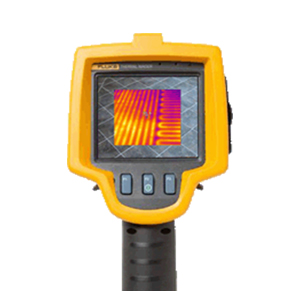
Every home inspection includes Free Thermal Imaging Scan with an Infared Camera. 
The Barrie Home Inspections was the first “Home Inspector” in Barrie, Allison or Orillia to offer Thermal Imaging Inspections as part of the Home Inspection Process. This allows us to perform the highest quality home inspection available without charging our clients extra fees to use inspection equipment we already have. Thermal Imaging can find issues in new homes as well as in older homes. A good example of this is the insulation required in exterior walls, which in older homes, was only required to extend down 18 inches below grade. In a finished basement a Thermal Imaging Camera will immediately show whether insulation was extended down to the floor when basement was finished or not. This could be a huge area of heat loss which would necessitate removing entire wall finish to rectify.
With the modern home’s Building Envelope becoming tighter and tighter, moisture has become an issue inside newer homes. Without the proper airflow moisture from your bathroom, laundry or air conditioning can create mould or mildew in your home. New homes can have moisture from construction and wet soil conditions trapped between your basement walls and your insulation’s vapour barrier. Thermal imaging Inspections, combined with a moisture meter can identify areas of hidden moisture which can then be repaired preventing mould growth and wood rot. Barrie Home Inspections will use Thermal Imaging Camera and a Moisture Meter to detect and verify any presence of Moisture.
Thermal Imaging is beneficial when inspecting Commercial Building roofs. On multi-layer built up roof layers, moisture can be detected between layers which can help prevent leaking roofs. Roof inspections are very important part of the Inspection Process due to the high cost of replacement or repair.
Electrical Hot Spots
Thermal imaging Inspections can find hot spots in your electrical system. Aluminum wiring can corrode at connections and start arcing, causing heat. Thermal imaging can find these hot areas where a licensed electrician can repair problem before excessive heat could lead to causing a fire.
Heat Loss
Identifying areas of heat loss, around doors and windows, can save you money when leaks are repaired. Caulking and adding insulation to common areas of heat loss can save home owners between 10 and 15% of their energy bill. The pictures below show section of ceiling at flue pipe penetration where there a large amount of heat loss was discovered during Thermal Imaging Inspections. Insulation was probably moved to install flue pipe and not replaced.
WETT Certified Inspections
Providing Level One WETT Certified Inspections for Wood Stoves, Fireplaces, Pellet Stoves, Fireplace Inserts and Outside Boilers. Most insurance companies will require a WETT Inspection when buying a new home or changing insurance companies. Report issued at time of inspection. We provide WETT Inspection Services 7 days a week.
WETT Inspection is only $75.00 per appliance when included with Home Inspection
Call Roger Today at 705-795-8255
The Basic House. Any building has to have a permit and that requires a drawing or plan. It is important to identify all the dimensions for the wall. The openings for the doors and windows must be placed exactly. The corners of the wall are very important to the placing of the structure and must be laid out exactly. Taking measurements from the foundation or floor plan, and transferring those measurements to the foundation, footing or floor slab is the first step in laying out the wall.
Cladding is a layer of material that covers the exterior of a building in order to protect the structure from outside elements such as wind, rain and fire. Cladding does not just refer to weatherboard type products; it also refers to metal, brick and cement sheeting. It can be installed on the walls or roof of a building.
There should be an access opening to all attic spaces that exceed 30 square feet and have a vertical height of 30 inches or more. The rough-framed opening should be at least 22 inches by 30 inches. It should be located in a hallway or other readily accessible location. An attic access that is located in a clothes closet is often inaccessible due to permanent shelving installed. There should be headroom that is a minimum of 30 inches above the attic access. In some places “attic” is used more specifically to apply to lofts which have boarded floors and ceilings, and usually windows or skylights, and then “loft” is kept to mean a dark, unboarded roof-space which lacks these features.
Pin-hole leaks can occur anytime copper piping is improperly grounded and/or bonded; nonmetal piping, such as Pex or PVC, does not suffer from this problem. The phenomenon is known technically as stray current corrosion or electrolytic pitting. Pin-holing due to poor grounding or poor bonding occurs typically in homes where the original plumbing has been modified; homeowners may find a new plastic water filtration device or plastic repair union has interrupted the water pipe’s electrical continuity to ground when they start seeing pinhole water leaks after a recent install. Damage occurs rapidly, usually being seen about sixmonths after the ground interruption.
Fully open the hot and cold water faucets and fill the whirlpool tub with water at least 1 to 3 inches above the whirlpool jets. Do not operate the pump until all jets are submerged. Direct the jets downward before activating the pump. Inspect the amount of bubbling with the controls. The suction inlets typically have very small openings, less than 1/8-inch in diameter, to prevent catching hair and pulling someone’s head under water.
The term “septic” refers to the anaerobic bacterial environment that develops in the tank and which decomposes or mineralizes the waste discharged into the tank. Septic tanks can be coupled with other on-site wastewater treatment units such as biofilters or aerobic systems involving artificial forced aeration.
The Barrie Home Inspections company provides visual and Thermal Imaging inspections of all major components of your home. A small investment considering the expense of buying property. Visit the Barrie Home Inspector’s Contract page to view inspection details.
Plumbing Maintenance and Basics. The plumbing vent system is part of the building plumbing drain system and serves two basic functions, which are to allow the drains to flow freely by allowing air into the drain and avoiding slow drainage which would occur if there was no air. The second function is to allow sewer gases to vent safely outdoors. This prevents the buildup of dangerous and smelly gases inside the home.
Direct venting of fixtures is permitted with 8 feet of vent. Basically, larger piping diameter allows longer distances between a plumbing fixture and its vent stack. If a plumbing fixture is located too far from the main building vent stack, then its own drain pipe must have its own vent stack connection piping.
Wet venting occurs when your fixture, such as a toilet is too far from main vent stack to be properly vented. A wet vent would be a drain for another fixture which would be located closer to the main vent stack and is increased by one size to allow adequate air in to properly vent toilet.
Plumbing vent leaks and odours can be caused by a variety of items. Dis-connected lines in wall cavities, vents not run outside or blocked vent lines are just some of the common causes of noise or smells. Ensure any plumbing in your home is performed by a trained and licensed plumber.
CPVC Chlorinated polyvinyl chloride pipe is not as flexible as PB or PEX and the fittings are solvent welded (glued) rather than press-on. This pipe is likely to split if freezing occurs. CPVC pipe is suitable for use on both hot and cold water lines. There have been reports that CPVC pipe made by JM Eagle Corp has some problems with defects found within first year of installation.
Plumbing troubleshooting is an essential first step to making successful repairs. If you haven’t identified the correct cause, you might spend time and money on efforts that will go nowhere. Locating the origin of sound is the first step, once the sound is located the problem may be self evident or you may require the services of a licensed plumber. Most homeowners are capable of cleaning a sink drain which is usually a simple fix.
Communication Growth in 20th Century. Communication begins for all of us when we are too young to speak but convey our messages by facial expressions. This method is known as pre-verbal communication.
Language it the vehicle which allows people to communicated their thoughts and ideas to other people and through print to save those ideas and not only share them with their contemporaries but to pass them down to the generations to come.
The development of the electric telegraph in the 1840s and the telephone in the late 1870s made rapid long-distance communications possible. Both media began in local areas and then rapidly spread to connect large parts of the Nation and the world.
The 20th century brought the invention of “radio” a form of wireless telegraphy which increased the mobility of communications and was used in point to point and multi-point communications. Later with the invention of the amplifying vacuum tube the radio transatlantic communications became possible.
On the domestic front, the Radio Act of 1912 established a radio licensing regime within the Department of Commerce and required certain ships to carry radios for communications. Due to conflict between amateur radio operators and the U.S. Navy and corporations, the Radio Act further regulated private radio communications, thus setting the precedent for federal regulation of wireless communications. This act was just the first step in the many regulations that would be enacted to control the private use of communications.
The development of electronic surveillance for legitimate purposes such as intelligence and law enforcement investigation, as well as for illegitimate purposes, spurred enactment of a number of laws intended to comprehensively address such activities. Congress enacted the first federal wiretap statute as a temporary measure to prevent disclosure of domestic telephone or telegraph communications during the First World War.
The first experimental communications satellite was launched in 1962. It was the first satellite to receive, amplify, and simultaneously re-transmit signals from earth. The development of satellite communications available not only to governments but also the commercial sector and individuals led to even greater volumes of communications worldwide.
The Internet is a globally distributed network comprising many voluntarily interconnected autonomous networks. It operates without a central governing body. However, to maintain interoperability, all technical and policy aspects of the underlying core infrastructure and the principal name spaces are administered by the Internet Corporation for Assigned Names and Numbers (ICANN), headquartered in Marina del Rey, California. ICANN is the authority that coordinates the assignment of unique identifiers for use on the Internet, including domain names, Internet Protocol (IP) addresses, application port numbers in the transport protocols, and many other parameters
Your Homes Cladding System. Plywood is a structural panel. Plywood siding is popular because it is less expensive to install than solid wood siding. It is readily available and easily installed. Plywood siding adds to the strength of a house’s structure. Most plywood siding requires an exterior wood finish. Rough-surface plywood is ideal for paint and stain.
Hardboard is a popular type of fiberboard that is made from wood fibers designed with a specific density. It is compressed into a dense, wood fiberboard. Synthetic adhesives provide bonding between the fibers. Hardboard has a uniform composition and appearance. There are no grains, knots or natural deficiencies.
Particleboard is available as overlaid particleboard siding and as waferboard.
Overlaid particleboard siding has a particleboard core, overlaid on both sides, with a resin-impregnated fiber sheet. It has a smooth surface. Waferboard is particleboard with large wood flakes left exposed. It does not absorb paint or stain well and should not be used as exterior siding. Waferboard is typically used for sheathing under the siding. Waferboard is made of wafers that are not oriented the way OSB is.
Paint and stain are considered to be necessary by most people who want to extend the life of their wood siding. Paint and stain can give the house a desirable appearance and protection against weathering. On an inspection, you may find that wood siding has paint or stain that is in poor condition. The siding on the south side will usually weather and deteriorate before the other sides of the house because of its exposure to the sun.
Look for cracking, peeling, checking and blistering paint conditions. Poor paint conditions could be the result of many things, including moisture problems. Peeling paint is often caused by poor preparation of the surface prior to painting. Cracking may be caused by old age, and the expansion and contraction of the wood. Blistering could be caused by moisture. Try to note the general condition of the paint surface of the siding as a whole, and then move in closer and report any smaller areas that are significantly deteriorated.
When the moisture content of wood is above 20%, and the external temperatures are between 40 F and 115 F, wood rot may be found. If you find rot, look for the source of the moisture. The source can be from a roof leak, gutter leak, openings or gaps in joints, condensation, air movement, wood installed close to grade or in contact with soil, inadequate drying, or other conditions. Oftentimes, the source of water penetration into a wall comes from the poor building practices around the windows and doors or wall attachments, such as light fixtures. Wood siding is susceptible to rot at the ends of the boards. Cut boards should be sealed or painted in order to resist wood rot.
Professional home inspectors will check your exterior cladding for signs of deterioration, condition of finish and any signs of rot. The Barrie Home Inspector has performed over 4,000 home inspections and is the Premier home inspector for Barrie, Orillia and Alliston
Your Home Electrical System. In many older residential areas, and practically all rural locations, the electrical supply is delivered to the property via overhead conductors strung on telegraph poles. The high-voltage lines connect directly to the property through a transformer delivering main power.
Most residential buildings are supplied with 120/240-volt services. This means that the cable assembly is made up of two un-grounded (live or hot) conductors each supplying 120 volts, and one neutral or grounded conductor acting as the return.
The masthead, or gooseneck, as it is sometimes called, is at the top of the mast itself. Its purpose is twofold: first, to act as a rain cap to stop moisture from entering the conduit; and, second, to provide the bushings to prevent the individual conductors from being damaged by rubbing against the metal components. The masthead should be undamaged and securely fastened to the service mast.
Type-UF cable is rated for direct burial, and has outer sheathing that is resistant to moisture and damage from soil. This type of cable must be buried to a depth of 18 to 24 inches (depending on the location, as described in section/table 300.5 of the NEC) and, if embedded in rocky ground, must be installed in a manner that will not damage the cable. This cable still needs to rise in a conduit to prevent mechanical damage before it enters the building. The visible conduit should be made of either galvanized steel or gray plastic, rated for the purpose.
Electric charge is a property of certain subatomic particles, which gives rise to and interacts with the electromagnetic force, one of the four fundamental forces of nature. Charge originates in the atom, in which its most familiar carriers are the electron and proton. It is a conserved quantity, that is, the net charge within an isolated system will always remain constant regardless of any changes taking place within that system. Within the system, charge may be transferred between bodies, either by direct contact, or by passing along a conducting material, such as a wire. The informal term static electricity refers to the net presence (or ‘imbalance’) of charge on a body, usually caused when dissimilar materials are rubbed together, transferring charge from one to the other.
The main circuit breaker, usually located inside the main panel at the top, shuts off all of the electricity to the house. In a dire emergency, this is the one to turn off. Otherwise, shut off only the breaker that serves the problem circuit-that way, other parts of your house will continue to have lights and power. The main circuit breaker does not shut off the wires that run from the main panel breakers to the electric meter-these are always hot.
A typical home has several circuits to deliver electricity to different areas of the property, as shown in the illustration below. All of these so-called branch circuits originate at a service distribution panel, which has two hot bus bars and one neutral bus bar. Depending on the amount of electricity a given circuit needs to deliver, it may attach to only one hot bus bar and the neutral bus bar or to both hot bus bars. For example, a circuit that delivers 120 volts connects to one hot bus bar and the neutral bus bar, while a circuit that delivers 240 volts connects to both hot bus bars.
Many people use the term “Romex” when referring to type-NM cable. Romex is a trademark name that has come into common usage for plastic-covered wires, but type-NM just means “non-metallic,” and also applies to other cable styles. The earliest NM cables were, in fact, rubber-insulated copper conductors bound together as an assembly, with a woven-cloth sheathing. Originally approved by the NEC in 1928 as replacement for knob-and-tube wiring, it became the most common residential wiring used from the late 1940s, up to the introduction of modern thermoplastic (Romex) type wiring of the early 1960s. Prior to 1985, standard NM was rated for 60-degree applications, which was increased to 90 degrees and is now marked NM-B.
The Barrie Home Inspector checks your electrical panel and home circuits during your home inspection. He can identify illegal connections or poorly installed wiring. With all the Do-It-Yourself work being done in homes today, it is a good investment to have your home inspected by a professional prior to purchasing. Some sellers hide defective workmanship and the fact that work was done without a permit and hope that the buyer does not ask or notice the deficiencies. Be a smart consumer protect yourself with a Professional Home Inspection.
Seniors and Strength Training. If you’re interested in feeling stronger, healthier, and more vital, this program is for you. This strength-training program was developed by experts at Tufts University and the Centers for Disease Control and Prevention.
The common perception of the elderly is that they become weak and fragile due to an age induced muscle wasting. The clinical term for this condition is sarcopenia, and it has been shown to contribute to the reduction in muscle mass and strength associated with
aging. However, studies involving injury and disuse have clearly demonstrated that inactivity can also induce muscle wasting, and is a major factor in the loss of muscle mass.
A common characteristic of muscle from sedentary elderly subjects is a phenomenon called fiber type grouping. Muscles of young and middle-aged subjects contain a mix of fibers types, and therefore have a checkerboard appearance. In untrained elderly subjects clumps of muscle fibers have been observed and consist of predominantly slow twitch or type I fibers. This type of muscle fiber distribution has also been shown in patients with certain
neural diseases and it has been suggested that re-innervation is responsible for the effect. The basic theory states that fast twitch motor neurons, which are connected to type II muscle fibers, atrophy and die by a process called apoptosis when they are not recruited over long periods of time. Therefore, extended periods of inactivity and a decrease in the recruitment of fast muscle fibers in the elderly may contribute to the apoptosis.
Your bones are alive and always changing according to the stress placed upon them. Without stress the effects of osteoporosis are accelerated with deterioration of the skeletal material. Weight bearing activities are the key to keeping broken bones at bay. For the lower body to prevent weak ankles, hips and pelvis. For the upper body to strengthen wrists, arms and ribs.
Warm up with ten minutes of aerobic exercise. This can be with treadmill walking or jogging, stationary bicycle, cross-trainer or stepper machines. Extend this to thirty minutes depending on requirements for fat loss. In any case, It is recommended that you perform at least 30 minutes of cardio exercise at moderate intensity three times each week for all weight trainers in order to promote aerobic fitness. It need not be done at the same time as the weights session.
If you have little experience of weight training and free weights, you may wish to start with the machine leg press instead of the squat, especially if you’re not accompanied by a trainer, helper or spotter.
The rest period between sets is variable according to your goals. For strength rather than muscle size (hypertrophy), longer rests are required – preferably about two minutes or more. For hypertrophy and elements of muscle endurance, shorter rest usually works best – around 45-90 seconds. Considering that this program is designed for a combination of strength and muscle building, you will rest for one minute if possible. Longer rests between sets are sometimes problematic in busy gyms but a longer interval than one minute is fine if that’s what you require to continue.