Furnace Maintenance Tips
Written by Roger Frost, the Barrie Home Inspector
Heating system and maintenance
In general, heating systems are easy to maintain and are usually trouble free. Efficient operation is a function of good regular maintenance. There are several things you can do to keep your heating system in top condition no matter the type of furnace you have. When a heating or cooling system fails, it is typically one of three things creating the issue ( the heat/cold source , the distribution system and/or the thermostat) . If the furnace or A/C doesn’t work , chances are the issue is at the source. The unit may have lost power , fuel may not be reaching the unit or the fuel may not be igniting. If the unit turns on but the cold or warm air isn’t reaching the rooms , the blower or distribution system may be faulty. A faulty thermostat or control , could keep the unit from turning on or cause it to turn on and off repeatedly. Whatever the problem, start with the simplest procedures. In most cases, all it takes is patience and common sense.
Before working on the system , take these preliminary steps:
Make sure the unit is receiving power . Make sure the unit doesn’t have a blown fuse or tripped breaker. Some furnaces have a separate power entrance on a separate panel and some have fuses mounted on or in the unit.
If the unit has a reset button , let the motor cool down and press the button. If it doesn’t work right away , wait a little while and try it again.
Make sure the units power switch is turned on. Remember , the unit may have a separate power switch.
If it is a gas burning unit, make sure the gas is on and the pilot light is lit. If it’s an oil burning unit check and make sure there is an adequate supply of oil.
If working on the system is necessary remember these important safety factors :
Before doing any work on the unit , make sure all power to the unit is turned off. Remember the unit could be on a separate panel. Make sure the breakers are tripped or the fuses are removed for the particular unit. If your not sure which breaker or fuse it is , trip the main breaker or remove the main fuse to shut off the power to the entire house.
If the unit is constantly tripping breakers or blowing fuses then there is an issue with the electrical. If this is the case , call a professional service person.
If your home smells of gas , leave your home immediately, leave the door open and call the gas company to report a leak. Do not turn any lights on or off and do not re-enter your home.
Keep your furnace clean
Dirt is your furnaces greatest enemy. It can waste fuel drastically lowering the units efficiency. Dirt affect three basic components on your furnace ( the filter , the blower and the motor ) so keeping them clean is the most important part of furnace maintenance. A disposable furnace filter should be replaced monthly during periods of continuous use. To check the filter , simply remove it and check to see if it looks clogged. If it looks clogged replace it regardless of how long it has been used. Install the filter with the arrow on the outer edge pointing towards the blower on the inside of the furnace. The filter size should be marked on the outer edges of the filter.
A permanent filter can usually be cleaned with a filter coating chemical which should be available at your local hardware store. Clean this filter according to the manufacturer’s instructions which may be located in the furnace housing.
Cleaning the blower assembly is also important for maintaining your furnace because the openings can often become clogged with dirt. To clean blower, remove panel that covers filter to gain access to blower or panel on front of furnace. This panel may be slip-fit on hooks or held by series of retaining screws. Access to inside of blower is usually gained by sliding out fan unit, which is held on track by screws. With toothbrush, clean each fan blade and spaces between blades. Then, with vacuum cleaner hose, remove all dirt and debris loosened by brushing. Also vacuum belts and pulleys. Wipe motor housing clean to prevent heat build-up in the motor.
Keep your furnace motor lubricated
To keep your furnace motor running cool, make sure it’s clean. Most furnace motors are permanently lubricated and sealed by the manufacturer however some have covered oil ports above the bearings near the motor shaft. If your furnace motor has oil ports , it should be lubricated annually .Apply two or three drops of 10-weight non-detergent motor oil (not all-purpose oil) to each port. Do not over lubricate. If the blower shaft also has oil ports then it should be lubricated as well. If the blower shaft has grease cups instead of oil ports then remove the caps from the grease cups and fill the cups with bearing lubricant which should be available at your local hardware store.
Inspect on your furnace belt
While lubricating your furnace motor, it is a good time to check the belts. If the belts are worn or frayed , replace them with new one’s that are the same type and size. If the belt squeaks while the motor is running , spray it with fan belt dressing which should be available at your local hardware store. These steps should hopefully help keep your furnace healthy and your family warm for years to come.
To keep the unit in good shape , have it professionally serviced annually. The end of the heating season is usually the best time to do this because of off-season discounts and the company won’t likely be as busy. It a good idea to have your air conditioning unit serviced at the same time.
Roger Frost
Barrie Home Inspections
Sleeping Patterns of the Elderly. Many elderly people complain about getting less sleep. We think this is related to getting older. While it’s a common belief that getting older means less sleep and more fatigue, a new study suggests that older adults may actually enjoy better sleep than their younger counterparts.
Researchers conducted phone surveys of more than 150,000 Americans and found that people in their 80s had the fewest complaints about sleep disturbances and daytime fatigue compared to other age groups. The study appears in the March edition of the journal Sleep.
Some sleep specialists think we have got to get away from all these myths about ageing – many people are very content with their sleep.” However, he said that asking people for their subjective opinion about sleep patterns could produce answers that were dependent on their mood at the time. “If you are angry because your boss didn”t give you a pay rise, your perception of sleep quality may be very different from someone who is feeling generally content.
It’s not clear why older people reported fewer sleep disturbances and tiredness, the authors said. It could be that older people have more control over sleep duration while younger people experience more stressors (jobs, kids, socializing) that interfere with sleep. It’s also possible that older people are just more accepting of sleep quality and don’t complain about it as much.
As we age, our bodies secrete less of two important sleep hormones: melatonin and growth hormone. Melatonin is important because changes in the level of this hormone control our sleep cycle. With less melatonin, many older adults feel sleepy in the early evening and wake up in the early morning. They also may have more trouble falling asleep. Growth hormone is what makes children sleep so deeply. As we age, our body secretes less of this hormone and deep sleep becomes more difficult.
Sunlight helps your body to produce melatonin, which regulates your sleep cycle. Try to get at least two hours of exposure to bright light each day. If it is difficult for you to get outside, consider using a full-spectrum light indoors. Using alcohol, nicotine or caffeine can also affect your sleep patterns.
Regular exercise and healthy eating habits could be all that is required to make your dreams come true for your next evening sleep. Adopting a more active lifestyle can make the world of difference in most elderly peoples lives. Always consult with your doctor before starting an exercise program or changing your diet.
The inspection of Commercial Properties is performed by someone who has experience and knowledge to inspect structures such as; residential, mixed-use, factories, storage, office buildings, restaurants or any combinations of these. This will provide potential buyer with a PCA report that will enable him to make his purchasing decision based on the findings.
As a member of NACBI our inspectors represent the best of the best with experience and professionalism for our respective trades. NACBI members follow the industry nationally accepted guidelines of ASTM International for Property Condition Assessments and Inspection Institute standards of practice for infrared thermal imaging Inspections.
Commercial Buildings usually fall under a separate part of the building code for a reason. The bigger the building the more complicated the design. Large Buildings is an intensive course dealing with the Occupancy of Buildings; Building Fire Safety; Safety within Floor Areas; Exits; Barrier Free Design; Structural Design; Change of Use and Renovations to name a few. As you can see from the subject titles all of these aspects of a building are important and can be very expensive to repair or upgrade.
Commercial property’ covers a range of options from office and retail space through to car parks and industrial properties like warehouses and factories. You may be surprised by this, but investing in commercial properties can be quite affordable, sometimes costing less than many residential properties. There is now a defined protocol for due diligence building inspections. For years, there has been a well-defined standard for performing Environmental Site Assessments. This new protocol should eventually make it easier for those involved with commercial real estate transactions, as the report contents and format have been well defined.
The Commercial Building Inspector www.commercialbuildinginspector.ca also provides Environmental Assessments. A Phase I ESA is an assessment of a property conducted in accordance with the regulations to determine the likelihood that one or more contaminants have affected any land or water on, in or under the property. The Phase I ESA provides preliminary information about environmental conditions on the property; a determination of the need for, and where necessary, a basis for carrying out any Phase II ESA.
The Commercial Building Inspector has inspected Plaza’s, Strip Malls, Office Complex’s, Factories and Industrial Buildings, Churches, Mixed Use Commercial, residential apartment buildings, Commercial Leases and properties valued up to 30 million dollars. We use the lastest equipment and all our staff are highly trained in the Ontario Building Code and have many years of practical experience which ensures your investment will be protected.
Ontario Commercial Building Inspector. Member of NACB, NACHI, OBOA and WETT Certified. Thermal Imaging scan of roofs and electrical panels. Certified Building Code Official.
Home inspection by Barrie Home Inspector. A home inspection is a limited, non-invasive examination of the condition of a home, often in connection with the sale of that home. The inspector prepares and delivers to the client a written report of findings. The client then uses the knowledge and information contained in his home inspection report, to make informed decisions about the home they are purchasing. The home inspector describes the condition of the home at the time of inspection but does not guarantee future condition, efficiency, or life expectancy of systems or components.
A home inspection consists of a visual inspection of your homes major components and fixtures. The home inspector will operate fixtures and make a note of any deficiencies. This will all be included in a report detailing all problems found.
Your home inspection report, prepared by the Barrie Home Inspector will include a review of your heating system, electrical system, air conditioner, interior plumbing, roof, attic visible insulation, basement, foundation and any visible structure. The inspection will also include Free Thermal Imaging scan of home.
When scheduling the home inspection it is recommended you attend the whole home inspection when possible. This is a good opportunity to learn where all the shut offs are for furnace, hot water tank, main water shut off, electrical shut, fireplace shut off, and the main water shut off for the home. You can take this opportunity to ask questions and you will be shown any deficiencies at the time the inspector finds them, giving you a great opportunity to learn fully about the cause and effect of the deficiency.
A picture is worth a thousand words. This is why we go over your report in a slide show at the end of the inspection. We also put your report online in a fully descriptive format which gives you a picture of every defect and a brief description of problem and a recommendation on how to fix or deal with the deficiency.
Barrie Home Inspections offers a 100% Money Back Guarantee on every residential and commercial building inspection. They also offer Free Thermal Imaging scans with every inspection. As a Certified Building Code Official and a former Registered Builder with Hudac his experience far exceeds that of the competition. With over 4,000 building inspections the Barrie Home inspector should be your first choice when wanting to protect your investment.
Barrie Home Inspection – Certified Home Inspector
Barrie Home Inspection – A home inspection is a limited, non-invasive examination of the condition of a home. Most Real Estate companies now recommend a home inspection. Home inspections are usually conducted by a home inspector who has the training and certifications to perform such inspections. The inspector prepares and delivers to the client a written report of findings. The client then uses the knowledge gained to make informed decisions about their pending real estate purchase. The home inspector describes the condition of the home at the time of inspection but does not guarantee future condition, efficiency, or life expectancy of systems or components.

Barrie Home Inspection – What you Get
A Home Inspection is a visual inspection of all the components and systems of your home. The home inspector will operate and find items that are not functioning correctly. When a problem is found the inspector will include a picture and description of the problem in his report. The Barrie Home Inspection report will include all the pictures of any deficiencies with a detailed description. This will include reviewing condition of heating system, electrical systems, roof, attic, visible insulation, windows, doors, foundation and any visible structure. The inspection also includes a Free Thermal Imaging Scan.
Attending the Home Inspection
The home owner should attend the home inspection when ever it is possible. This is the opportunity to learn where all the shut offs are for furnace, hot water tank, main water shut off, electrical shut, fireplace shut off, and the main water shut off for the home. You, as the client, can take this opportunity to ask questions and you will be shown any deficiencies at the time the inspector finds them, giving you a great opportunity to learn fully about the cause and effect of the deficiency.
The Home Inspection Report
Your home inspection report will be put on line to allow you to view the report at your leisure. At the end of the inspection we present you a slide show of all the pictures taken and review all the deficiencies found. If you attend the inspection this will give you information about every deficiency three times, ensuring you fully understand the nature of any defects.
Barrie Home Inspections has performed over 4,000 building inspections and is highly qualified to inspect your home. His training includes being recognized as a Certified Building Code Official with the Ontario Building Officials Association and was a Registered Builder with HUDAC. Barrie Home Inspections was the first company in Simcoe County to perform Thermal Imaging scans as part of the home inspection process.
Free Thermal Imaging
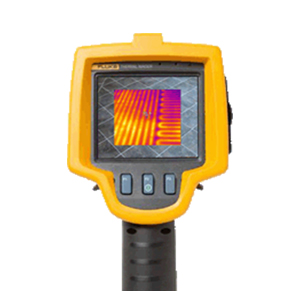
Every home inspection includes Free Thermal Imaging Scan with an Infared Camera. 
The Barrie Home Inspections was the first “Home Inspector” in Barrie, Allison or Orillia to offer Thermal Imaging Inspections as part of the Home Inspection Process. This allows us to perform the highest quality home inspection available without charging our clients extra fees to use inspection equipment we already have. Thermal Imaging can find issues in new homes as well as in older homes. A good example of this is the insulation required in exterior walls, which in older homes, was only required to extend down 18 inches below grade. In a finished basement a Thermal Imaging Camera will immediately show whether insulation was extended down to the floor when basement was finished or not. This could be a huge area of heat loss which would necessitate removing entire wall finish to rectify.
With the modern home’s Building Envelope becoming tighter and tighter, moisture has become an issue inside newer homes. Without the proper airflow moisture from your bathroom, laundry or air conditioning can create mould or mildew in your home. New homes can have moisture from construction and wet soil conditions trapped between your basement walls and your insulation’s vapour barrier. Thermal imaging Inspections, combined with a moisture meter can identify areas of hidden moisture which can then be repaired preventing mould growth and wood rot. Barrie Home Inspections will use Thermal Imaging Camera and a Moisture Meter to detect and verify any presence of Moisture.
Thermal Imaging is beneficial when inspecting Commercial Building roofs. On multi-layer built up roof layers, moisture can be detected between layers which can help prevent leaking roofs. Roof inspections are very important part of the Inspection Process due to the high cost of replacement or repair.
Electrical Hot Spots
Thermal imaging Inspections can find hot spots in your electrical system. Aluminum wiring can corrode at connections and start arcing, causing heat. Thermal imaging can find these hot areas where a licensed electrician can repair problem before excessive heat could lead to causing a fire.
Heat Loss
Identifying areas of heat loss, around doors and windows, can save you money when leaks are repaired. Caulking and adding insulation to common areas of heat loss can save home owners between 10 and 15% of their energy bill. The pictures below show section of ceiling at flue pipe penetration where there a large amount of heat loss was discovered during Thermal Imaging Inspections. Insulation was probably moved to install flue pipe and not replaced.
WETT Certified Inspections
Providing Level One WETT Certified Inspections for Wood Stoves, Fireplaces, Pellet Stoves, Fireplace Inserts and Outside Boilers. Most insurance companies will require a WETT Inspection when buying a new home or changing insurance companies. Report issued at time of inspection. We provide WETT Inspection Services 7 days a week.
WETT Inspection is only $75.00 per appliance when included with Home Inspection
Call Roger Today at 705-795-8255
Your Home Electrical System. In many older residential areas, and practically all rural locations, the electrical supply is delivered to the property via overhead conductors strung on telegraph poles. The high-voltage lines connect directly to the property through a transformer delivering main power.
Most residential buildings are supplied with 120/240-volt services. This means that the cable assembly is made up of two un-grounded (live or hot) conductors each supplying 120 volts, and one neutral or grounded conductor acting as the return.
The masthead, or gooseneck, as it is sometimes called, is at the top of the mast itself. Its purpose is twofold: first, to act as a rain cap to stop moisture from entering the conduit; and, second, to provide the bushings to prevent the individual conductors from being damaged by rubbing against the metal components. The masthead should be undamaged and securely fastened to the service mast.
Type-UF cable is rated for direct burial, and has outer sheathing that is resistant to moisture and damage from soil. This type of cable must be buried to a depth of 18 to 24 inches (depending on the location, as described in section/table 300.5 of the NEC) and, if embedded in rocky ground, must be installed in a manner that will not damage the cable. This cable still needs to rise in a conduit to prevent mechanical damage before it enters the building. The visible conduit should be made of either galvanized steel or gray plastic, rated for the purpose.
Electric charge is a property of certain subatomic particles, which gives rise to and interacts with the electromagnetic force, one of the four fundamental forces of nature. Charge originates in the atom, in which its most familiar carriers are the electron and proton. It is a conserved quantity, that is, the net charge within an isolated system will always remain constant regardless of any changes taking place within that system. Within the system, charge may be transferred between bodies, either by direct contact, or by passing along a conducting material, such as a wire. The informal term static electricity refers to the net presence (or ‘imbalance’) of charge on a body, usually caused when dissimilar materials are rubbed together, transferring charge from one to the other.
The main circuit breaker, usually located inside the main panel at the top, shuts off all of the electricity to the house. In a dire emergency, this is the one to turn off. Otherwise, shut off only the breaker that serves the problem circuit-that way, other parts of your house will continue to have lights and power. The main circuit breaker does not shut off the wires that run from the main panel breakers to the electric meter-these are always hot.
A typical home has several circuits to deliver electricity to different areas of the property, as shown in the illustration below. All of these so-called branch circuits originate at a service distribution panel, which has two hot bus bars and one neutral bus bar. Depending on the amount of electricity a given circuit needs to deliver, it may attach to only one hot bus bar and the neutral bus bar or to both hot bus bars. For example, a circuit that delivers 120 volts connects to one hot bus bar and the neutral bus bar, while a circuit that delivers 240 volts connects to both hot bus bars.
Many people use the term “Romex” when referring to type-NM cable. Romex is a trademark name that has come into common usage for plastic-covered wires, but type-NM just means “non-metallic,” and also applies to other cable styles. The earliest NM cables were, in fact, rubber-insulated copper conductors bound together as an assembly, with a woven-cloth sheathing. Originally approved by the NEC in 1928 as replacement for knob-and-tube wiring, it became the most common residential wiring used from the late 1940s, up to the introduction of modern thermoplastic (Romex) type wiring of the early 1960s. Prior to 1985, standard NM was rated for 60-degree applications, which was increased to 90 degrees and is now marked NM-B.
The Barrie Home Inspector checks your electrical panel and home circuits during your home inspection. He can identify illegal connections or poorly installed wiring. With all the Do-It-Yourself work being done in homes today, it is a good investment to have your home inspected by a professional prior to purchasing. Some sellers hide defective workmanship and the fact that work was done without a permit and hope that the buyer does not ask or notice the deficiencies. Be a smart consumer protect yourself with a Professional Home Inspection.